Wednesday, May 17, 2006

The ride of his life

Another fascinating "when animals attack" story, this one from Banff, Alberta, Canada. Last weekend, a black bear chased down, caught and mauled a bicycle rider on a mountain trail in Banff National Park. The biker had severe arm injuries.

The creepy part? The bear supposedly chased the cyclist for a long time before catching up with him.

Two friends of the injured man found him, with the bear still hovering nearby. The bear was killed by a law enforcement officer.

Riding on water

Leave it to Al Brody to figure out a way to ride his bike on the water.... sort of.

Brody is a trails and open space advocate who is also a bicycling fanatic. In 66 days, he'll be on the road at RAGBRAI, the hugely popular bike ride across Iowa that attracts thousands each year.

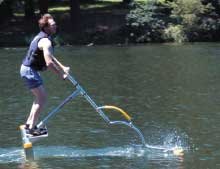
But now, he can be found at Prospect Lake on his newest toy, an Aqua Skipper. (Check out the video on this site... this isn't Al at left.)
Here's how it works: put your feet on the platform and your hands on the handles and hop up and down to propel yourself forward. The hydrofoils lift the Aqua Skipper above the water. Brody says he has been working with the Aqua Skipper, but so far it takes him about 40 feet before it stalls and he has to swim.

Heat applied to ski resort deal

Sen. Ken Salazar wants federal investigators to determine whether politics were behind approval of two roads needed for expansion at Wolf Creek Ski Area, the AP reports today.

Salazar said he asked the inspector general of the U.S. Department of Agriculture to investigate claims that high-ranking officials pressured U.S. Forest Service employees on behalf of the developer, Texas billionaire Billy Joe “Red” McCombs.

Inspector General Phyllis Fong’s office confirmed receiving Salazar’s letter, but had no immediate comment.

Salazar also asked Agriculture Secretary Mike Johanns, who oversees the Forest Service, to suspend any action on the project until an investigation is completed.

McCombs, co-founder of media giant Clear Channel Communications, wants to build 222,100 square feet of commercial space and enough housing for up to 10,500 people at the base of Wolf Creek.

Opponents, including the ski area’s operators, complain the Forest Service didn’t consider the entire project’s potential environmental impacts because of the developer’s political clout.

The Pitcher family, which has operated Wolf Creek for about three decades, is also suing to block the development.

Watch for developments here on the blog and in The Gazette. Leave questions or comments below or e-mail Deb Acord at deb.acord@gazette.com.

Tuesday, May 16, 2006

To the top

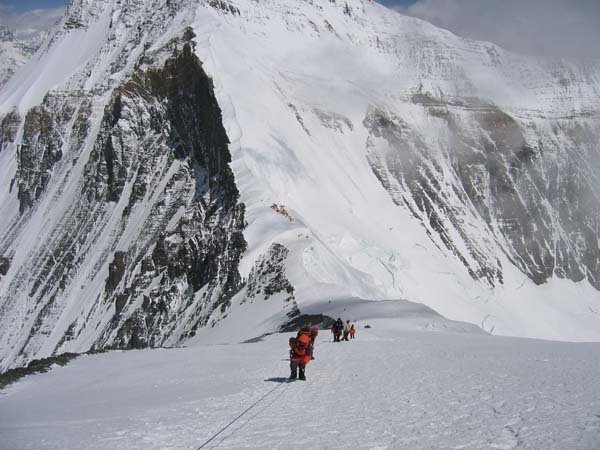
It's another first on Mount Everest. A New Zealand mountain guide who lost his legs from frostbite more than two decades ago reached the summit of Everest on Monday.

Mark Inglis, who spent 40 days on the mountain, got an early morning start from Camp Four, less than 1,500 feet below the 29,035-foot summit.

This wasn't the first big mountain for the 47-year-old climber is a Paralympic silver-medal cyclist, winemaker and father of three. In 2004, he climbed 26,906-foot Cho Oyu in Tibet. The expedition was expected to raise several hundred thousand dollars for a Cambodian center that rehabilitates land mine amputees, polio victims and others.

Step away from the field mouse


Don't pet the little critters. A campground at Natural Bridges National Monument in Utah has been closed because bubonic plague was detected among field mice and chipmunks there. Plague has also been found this spring in rodent populations at Mesa Verde National Park and Colorado National Monument.

The plague can be transmitted to people through flea bites and direct contact with infected animals. Human infection is unusual, but the most common transmission is from cats and dogs who can contract plague by catching and eating infected animals, or by being bitten by fleas that carry the plague.

Monday, May 15, 2006

Avalanche danger

Headed for the hills? Be prepared:

Avalanche monitors issued an unusual spring avalanche watch for Colorado today amid fast-rising spring temperatures.

"With this rapid warmup we have maybe a greater potential for wet-slab avalanches than we typically do this time of year,” Ethan Greene, director of the Colorado Avalanche Information Center, told the AP.

The avalanche watch applies to the mountains statewide above 11,000 feet through Thursday morning, Greene said. A watch means weather conditions could produce avalanches, he said.

Wet-slab avalanches occur when weak layers of snow become damp as temperatures rise. The avalanche center reported more than 24 avalanches last week, including one on Saturday that swept a climber about 1,000 vertical feet down Torreys Peak in Clear Creek County. The man was injured, but no details were immediately available.

Wild about wetlands

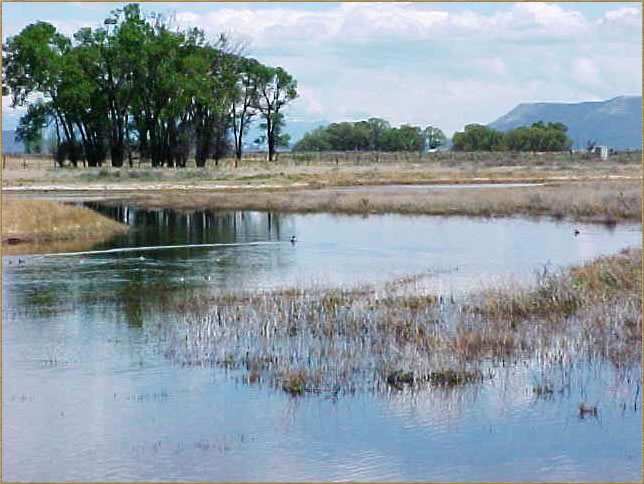
The Izaak Walton League sets aside May each year to celebrate wetlands. In honor of the celebration, take a moment to educate yourself on wetlands.
- Wetlands make up only 5 percent of land in the U.S. and support 190 amphibian species and one-third of all bird species.
- Almost 43 percent of the federally listed threatened and endangered animal species depend on wetlands for survival.
- Wetlands alongside a river are valued for their capacity to retain floodwater.
- Wetlands also act as buffers against wind and rain.
- Wetlands help purify drinking water by naturally filtering polluted runoff from city streets, buildings and agricultural lands.
- Seasonal wetlands provide a healthy habitat for amphibians such as frogs, toads and salamanders.
To experience this environment up close, check out the Tejon Street wetlands. Park at Dorchester Park off South Tejon Street and walk west on the river trail.

Plan for gated ski community near Vail


Plans were submitted last week for the Ginn Co., a Florida-based company known for building posh golf resorts, to build a private ski area and golf course community south of Minturn, near Vail.
According to the AP, the resort will include 4,300 acres and 1,700 housing units.

No word on how many skiable acres it will have, but anyone who wants to know what a members-only ski area is like can look at Montana's Yellowstone Club, 13,400-acre resort with the world's only private ski mountain and a golf course. According to AP, lots at the club sell for a minimum $1 million an acre and prospective members must prove they're worth at least $3 million.

So... I don't think I'll ever be skiing at the Yellowstone Club, or Battle Mountain, for that matter, if it gets built.

Friday, May 12, 2006

A dinosaur going extinct

photo credit: atvoindex.com
The AP reported today that GM will stop selling the original Hummer:

DETROIT - The 2006 model year will be the last for the Hummer H1, the hulking, gas-guzzling status symbol that has attracted celebrities and off-road enthusiasts but has drawn the ire of environmentalists. General Motors Corp. announced plans Friday for the H1, which is the foundation for the automaker's Hummer brand. Based on the military's Humvee, the about 12,000 put on the road since 1992 defined the Hummer name
I don't know about the rest of you, but my ire is drawn much more by the H2. Not only is it unnecessarily big, but not knowing how to drive, or park, seems to be a pre-requisite of ownership. Maybe it, too, will drive off into history eventually.

David Lien's Mt. Everest bid


For those of you who haven't been following David Lien's quest to climb the north ridge of Mt. Everest, let me get you up to date.

Lien is a local bank inspector, and in almost every way, an average, normal guy. He's not a mountaineering bad ass. He's not a full-time climber. He's just a guy who started climbing 14ers and decided he wanted to look into something more. Fortunately, there are plenty of guides willing to take average folks up big mountains, so Lien has climbed the highest peaks in Africa, North America, South America, and Antarctica, all as a sort of extreme tourist being led by a more experienced mountaineer.

Not that this kind of tourism takes much away from the climbing feat. Anyway you do it, scaling big mountains is tough. The altitude doesn't care if you are being guided or not. Neither does the weather. Things can go very, very wrong.

The day Lien arrived in Nepal, most everyone in the country went on strike and riots were breaking out in opposition of the king. Maoist guerrillas were getting increasingly noisy in the countryside. Fortunately, the high country of Everest's base camp is pretty quiet and Lien and his Russian guides arrived there safely. They've been ferrying gear to higher camps for a few weeks. Now they are resting at a lower altitude before making their final push.

We'll see what happens.

In the mean time, check out some of Lien's posts below to see what life on the mountain is like.

Black-footed ferrets win in gas auction

Photo by Bob Gress
Yesterday, we blogged about how Colorado's black-footed ferret habitat was going on the gas and oil auction block. The already struggling population probably would have been further damaged by any drilling. The media started to pick up the story. After all, whether you give a wit about ferrets or not, you have to agree that it doesn't make much sense to spend years and thousands of dollars reintroducing the little guys, only to ruin their habitat.

The energy companies must have decided that the bad PR of being involved in such a snafu wasn't worth the gas under the ferrets' Wolf Creek reintroduction area, because, according to the BLM, no one bid on most of the ferret parcels.

Here's a release from the BLM; we'll see if we can find out more soon.

DENVERToday the BLM Colorado State Office sold 148 parcels (of 171 offered) at its quarterly oil and gas lease sale, or about 154,903 acres (out of the approximate 192,334 acres of land offered) earning $6,827,682 in proceeds.

Many of the parcels offered within the Wolf Creek Management Area where the black-footed ferret is being re-introduced through a partnership with the BLM, the US Fish and Wildlife Service, and the Colorado Division of Wildlife did not receive bids.

Looking for Everest?

Follow the postings below to see recent notes by Springs resident David Lien as he prepares for a summit bid on the slopes of Mount Everest. There's also a report of a Steamboat Springs man who had to turn back following a health scare.

Look for May 10, May 8 and May 4

Thursday, May 11, 2006

What's it called - a prizzly?


Talk about your bears gone wild...

DNA tests confirm a bear shot by an American hunter in the Northwest Territories of Canada is the offspring of a polar bear mom and a grizzly dad. (Photo courtesy of AP)

"It’s something we’ve all known was theoretically possible because their habitats overlap a little bit and their breeding seasons overlap a little bit," said Ian Stirling, a polar bear biologist with the Canadian Wildlife Service in Edmonton. "It’s the first time it’s known to have happened in the wild."

Kuptana, an Inuit guide working for the hunter, was the first to notice something odd, according to The Associated Press. The bear’s eyes were ringed with black, its white fur was spotted brown, its face was slightly indented, and it had a mild hump to its back and long claws.

"It will be quite a trophy," Idaho hunter Jim Martell told the National Post. He told the newspaper he has dubbed his creature "polargrizz."

"He has a remarkable trophy from his perspective and from the perspective of this whole fraternity of people who like to go big-game hunting for trophies," said Stirling. When asked how he felt about the rare beast being killed, he would only say that Canada’s polar bear hunt — which runs from December through the end of May — is done on a sustainable basis.

Colin Adjun, a wildlife officer in Kugluktuk on the northern mainland in western Nunavut, said he’s heard stories before about an oddly colored bear cavorting with polars. "It was a light chocolate color along with a couple of polar bears."

The Eaglets have banded!


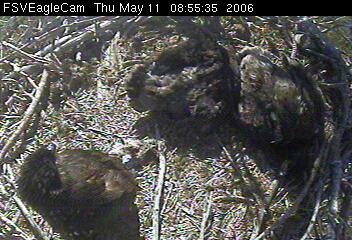
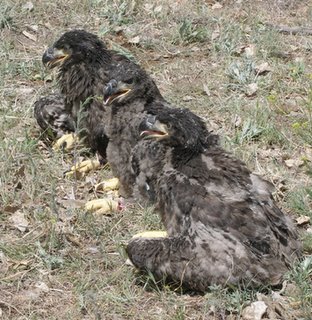
We've been making occasional visits to the Xcel Energy Eagle Cam, set up over a nest in northeast Colorado. And my goodness, those eaglets are getting big. They now have nearly full adult feathers, though bald eagles don't have white head feathers until they are a few years old. On May 3, they were banded by the Colorado Division of Wildlife. They'll fledge in mid-summer and be on their own by the fall.

Also worth checking out are the osprey cam, and the series of falcon cams the energy company maintains. You will never get a better look at these birds than from your desk.

Endangered ferret land on the oil auction block today

Photo courtesy National Park Service


An area of northwestern Colorado that is the only home of the endangered black-footed ferret in the state will have its gas and oil extraction rights auctioned off today.

The area of the BLM where hundreds of thousands of dollars have been spent to reintroduce the small prairie predator will go to the highest bidder and may soon be a network of drill pads, slag pools and roads that may drive the already struggling local population to extinction. Many of these ferrets were raised at the Cheyenne Mountain Zoo.

Here's an abridged presss release I just got from Center for Native Ecosystems:

CRAIG, CO – The land supporting Colorado's successful reintroduction of endangered black-footed ferrets will be leased to oil and gas drillers by the Bureau of Land Management on May 11, threatening the ongoing recovery effort on the very day Congress has designated as Endangered Species Day in the United States.
The 20 parcels in Rio Blanco County will be leased to the highest bidder Thursday, overriding concerns from state and federal wildlife biologists, local governments and conservation groups about the potential impact oil and gas development will have on North America's most endangered mammal.

"The Colorado BLM is gambling with the ferret's future,” said Erin Robertson, staff biologist for Center for Native Ecosystems. “Is this really how Colorado wants to celebrate Endangered Species Day?"

In addition, the BLM will also auction off land currently undergoing Resource Management Plan (RMP) revisions, including lands within the Little Snake Resource Area. RMPs serve as the management guidelines for use of public lands including outlining whether oil and gas drilling, if any, is allowed.

“BLM should not be offering massive lease sales, likely to lead to thousands of new gas wells, until the agency completes its plan.” said Pete Kolbenschlag of the Colorado Environmental Coalition. “By leasing land currently undergoing RMP revisions, BLM is on shaky ground in regards to legal obligations that govern how the RMP process should proceed. The cart is way before the horse on this.”

Colorado Environmental Coalition, Center for Native Ecosystems, Colorado Wilderness Network, The Wilderness Society, Colorado Mountain Club, and the San Juan Citizens Alliance have submitted a formal protest to BLM challenging the inclusion of a portion of sale parcels including black-foot ferret reintroduction habitat, acres undergoing RMP revisions, and wilderness-quality lands that have been proposed for wilderness protection.

“BLM has demonstrated that it can and will pull inappropriate parcels from a lease sale,’ stated Vera Smith of the Colorado Mountain Club. “There is still time for BLM to do the right thing and remove the remaining protested parcels that have important wildlife and recreation values.” This rush to drill draws additional concern due to the fact that Colorado has a surplus of lands already leased for oil and gas development that remain unused. “In Colorado alone 70 percent of the federal public lands leased for oil and gas development are not in production,” continued Smith, referencing a 2004 leasing report by The Wilderness Society. “Of the over 4.4 million acres already leased, only 1.3 million are in production. That is over a 3 million acre surplus.”

Wednesday, May 10, 2006

Did you hear the one about the lost hikers?


A couple lost in the mountains above my hometown for three nights were found alive Tuesday. They survived by scavenging items from the backpack of a hiker who vanished a year ago. Talk about good luck-bad luck.

From press reports, it sounds like the two Dallas residents, both in their 20s, rode the Palm Springs Aerial Tramway and set off on the warren of trails that branch out behind the restaurant/tram station. They weren't dressed for hiking, let alone spending the night in the shadow of Mount San Jacinto (10, 804 feet).

In addition to thanking their rescuers, the two paid tribute to John Donovan, 60, who disappeared while hiking in May 2005. His backpack provided the couple with matches, food and heavy clothing.

Donovan was last seen in the San Jacinto Wilderness on May 3, 2005, about two weeks after he retired. A friend believes Donovan got hurt and froze to death in a snowstorm that blew in. The two lost hikers are lucky they didn't get caught in a similar storm. Rescuers found them at about 4,500 feet near Tahquitz Canyon - about 2½ miles from the tram. Overall, they're fine.

I guess it still needs to said - we can't hear it enough! - always be prepared.

Thanks to Gary R. Burzell for use of the great photo. Brings back memories.

(posted by editor Dena)

Go west, young man

Gazette TV writer Andy Wineke and his kayaking pals may be headed to California, Oregon and Washington, where river runners predict a strong and long season, according to The Associated Press.

In Oregon, precipitation has been above average, and the snow pack in April was 36 percent above normal, according to the Natural Resources Conservation Service of the United States Department of Agriculture. Snowpacks also are above or well above average in the southern Cascades of Washington, southern Idaho, a portion of southwest Montana and a portion of northern Colorado.. Streamflow forecasts are also above average in northern Utah, southern and western Wyoming, northern Nevada and the Sierras of California.

(posted by editor Dena; Deb's outta state and Dave's crazy busy.)

On Everest, it's time for a summit push


Hi All,
As of 9 May we have finished our training/acclimatization period here, having hiked and climbed about 100 miles (up and down) between 17,056 ft. (Base Camp/Camp 1) and 24,300 ft. (between Camp 4 and Camp 5). Now, we’ve returned to Base Camp (BC) and will head down to local towns lower down for some rest and relaxation, and the higher oxygen content, before returning to BC on 14 May and beginning to move up the mountain again for summit attempts.

Most of us remaining appear to be generally healthy, with the exception of just about everyone having some sort of cough (due to the dry air and high altitude) of varying intensities. There are also one or two climbers that physically aren’t going to have a shot in any way, shape or form at even getting close to the summit. One man, in particular, sticks out. He’s a good guy and from Colorado, but probably should have left the mountain a week or two ago, but can’t bring himself to admit that he’s done here. While the rest of us have been up to Camp 4 twice already, he hasn’t been able to make it beyond Advanced Base Camp/Camp 3 due to various physical issues.

Coming to try and climb Everest clearly has been a dream of his for a very long time, and he took a second job to earn the money to get here, but in his obsession to try and reach the summit, he’s missing out on the whole point of mountaineering (and life in general) and potentially putting his life in jeopardy by continuing to try and climb when he is not fit to do so. I don’t feel sorry for him, because he’s old enough to have learned (if he can) that it’s the journey, not necessarily the destination, that counts most while cruising down life’s highway. If you aim high, knowing that sometimes you’ll hit low, with your life’s dreams and aspirations, you will inevitably accomplish great things. Summits are great and spectacular achievements, but just a small part of the whole picture, of the journey. He clearly hasn’t learned this yet.

To borrow a quote from the John Candy movie "Cool Runnings," “If you’re not enough without it, you’ll never be enough with it.”

So far, although I’ve reached all my initial goals for this expedition, I could walk away tomorrow without having come one step closer to the summit and be completely satisfied. Not so for my friend from Colorado, and more than a few others here.

“There are no secrets to success. It is the result of preparation, hard work, and learning from failure."
-- Gen. Colin Powell

However, so far I’m still healthy and in the game, but also realistic about my chances of reaching the summit. Of the 15 or so climbers still here hoping to reach the top, 3 or 4 might make it. Such is the difficulty of reaching Mt. Everest, the place on our planet where Heaven and Earth meet (quote borrowed from my friend Tish Stropes). If your only definition of success is the summit, than you’re bound to be disappointed. But what an incredible and glorious goal to strive for.

We’ll be starting back up the mountain from BC around May 15th to make summit attempts.
Stay tuned, David

You weren't the only one to get snow


Photo courtesy Aspen Times.
The top of Pikes Peak is as white as a wedding cake. The giraffe cam at the zoo shows the foothills also got a bit of snow, but it's melting fast.

And of course, there's snow in the mountains, where today, backcountry ski legend Lou Dawson is nearing the end of a retracing of the "Trooper Traverse," a backcountry ski route between Camp Hale and Aspen pioneered by the Army's 10th Mountain Division in 1944.

There's a good story about the endeavor in today's Aspen Times, detailing the four-day route, and how Dawson tracked down information from surviving members of the Division. Dawson is doing the ski with David Christie, the son of former 10th Mountain Division trooper Neil Christie, and a few others, but said their trip will be nothing like when the troopers did the 40-mile ski with 80-pound packs and huge, wooden skis.

The skinny on the Pueblo Kayak park


Gazette TV writer Andy Wineke paid his first visit of the season to the Pueblo Whitewater Park Sunday and reported back:

The flows were a little under 600 -- that makes most of the holes on the shallow side, but it's a friendly level for beginners. Or, in my case, for experienced paddlers dipping their blades for the first time of the year.

I'm sad to say there hasn't been anything in the way of amenities added over the winter -- it's still change in your car and pee at the McDonald's across the bridge. There are more trees planted, but it's going to be a long and slow process before Pueblo is anywhere near as inviting as, say, the Golden whitewater park.

As for the rapids -- Number one is still my favorite. It's a biggish breaking wave. Drop in and it's stupid easy to spin all day long. Low-angle cartwheels are possible, but it's a shallow spot. No. 2 is easy and shallow at this level. Strictly spins and low-angle cartwheels here. No. 3 is about the same, with a little better hole on river left. No. 4 has a sweet wave/hole in the middle, but it's very, very hard to paddle into from the eddy. I caught it on the fly and was too tired to get back. No. 5 is a lot like 3. No. 6 about the same.

No. 7 deserves special mention. When the park opened last year, 7 was extremely sticky at almost all water levels. Dangerously sticky at high water. One paddler reported seeing some girls in an inflatable raft taking the beating of their lives in 7 at high water last spring. Even at low water -- like 600 -- you had to paddle out or swim out. If you flipped over, the hole would recirculate you all day. You'd never flush out.

Naturally, that's a bit more excitement than the fine people of Pueblo had in mind when they built a whitewater park, so early this spring, No. 7 was mellowed out by raising No. 8 a foot or two (No. 8 isn't so much a playhole as a wave train that finishes off the course).

I'm happy to report that No. 7 is now a pretty straightforward wave/hole like Nos. 2, 3, 5 and 6. I think the danger is gone, although we'll have to see it at high water.

As for me, despite the long winter's rest, I can still cartwheel to my left, bungle it badly to my right, the handroll is still there and everything else still needs work. Fortunately, the season is just getting started.

Tuesday, May 09, 2006

Admire from a distance


The National Park Service officially banned climbing on named arches and natural bridges in Arches National Park today following a documented climb.

Dean Potter, 34, has photos and video of himself climbing up and rappelling from Delicate Arch - several times - on Sunday morning.

Arches Park Superintendent Laura Joss told The Associated Press she reported Potter’s climb to the Interior Department, and that rangers were investigating possible damage to the arch.

The new rules on climbing are posted on the park’s Web site. (Thanks to the National Park Service for the photo of Delicate Arch.)

“It’s one of the most beautiful things in the world to climb, and because it wasn’t illegal I decided to climb it,” Potter said. He studied the cracks and crevices on the arch for years, looking for a route he could take without climbing aids. He rated it a difficult climb, with some overhangs on the way up.

“I respected nature to the fullest. The most damage I did to the arch was to blow a little dust from the hand and footholds,” he told the AP.

A photographer was once charged with a misdemeanor for setting fires under Delicate Arch (the span displayed on Utah license plates).

(posted by editor Dena)

Monday, May 08, 2006

Climber turns back on Everest

While local resident David Lien is believed to still be acclimating for a summit bid on Everest, The Associated Press reports that a Steamboat Springs man has abandoned his attempt after experiencing chest pain at about 22,000 feet.

Matt Tredway turned back late last week and had returned to Katmandu, Nepal, by the weekend, according to his posting on the Web site of Team No Limits, his climbing group.

Tredway, a teacher at Steamboat Middle School, did not suffer a heart attack or any other heart damage, wife Dana Tredway told the AP.

On the Web site, Matt Tredway said turning back was a “bitter disappointment” but the right decision. Two Sherpa climbers helping Team No Limits were among three Sherpas killed April 21 when ice crashed down on them, the team reported on its Web site.

(posted by editor Dena)

Trip report: The Indian Peaks are still full of snow


I went for one of my first forays into the Indian Peaks west of Boulder this weekend for a little backcountry skiing. I think people from the Springs tend to ignore this range because it's right next to Denver - the trails can be a bit crowded - but let me tell you, with this year's healthy snows, my friends and I had a great ski, and the cool, glaciated peaks I saw already have me planning a return trip.

Some of the mountains there, while not especially high (Long's Peak is the only 14er) have classic alpine routes.
Just looking at Lone Eagle peak gives me the willies -- in a good way. And Mount Toll looked equally fetching.
As for crowded. On a full day ski, we only saw five other people. Not too bad for being an hour outside Denver.

Anyone else poke around the Indian Peaks? What are some favorite destinations?

Photo credit: imagesofcolorado.com

Friday, May 05, 2006

St. Helens "fin" growing


A fin-shaped slab of fresh volcanic rock in the crater at Mount St. Helens National Volcanic Monument is growing about 5 feet a day, The Associated Press reports. (Thanks to the USGS/Cascades Volcano Observatory for the cool photo, which is NOT of the fin, but the 1980 eruption.)

The 300-foot rock is one of seven lobes that have been pushing their way through the surface for about 18 months. You can see them from the Johnston Ridge Observatory, which is open 10 a.m. to 6 p.m. daily through Oct. 20. Or, you can look at photos of the crater and the fin.

Scientists expect over time the volcano will rebuild its conical peak, which blasted apart May 18, 1980.

(posted by editor Dena)

Watch out for the fumes

You try to be a good hiker and take care of your boots, but the smell of that sealant you spray on them is enough to kill a cat.

Actually, it has killed more than one cat. This week, the U.S. Centers for Disease Control and Prevention detailed its investigation into people and pets suffering after using a waterproofing boot spray. Almost 200 people and more than two dozen pets have gotten sick since early last year, and three cats died after exposure.
Most of the cases were linked to two products: Jobsite Heavy Duty Bootmate and Rocky Mountain Boot Weather and Stain Protector. In more than half the cases, the boots were sprayed indoors, but those who sprayed their boots outdoors or in a garage got sick after they brought the boots back inside.

The sprays have been pulled from the shelves, but if you've got some on a shelf somewhere, I'd get rid of it.

Looking for sun, head up Pikes Peak


These are the days in Colorado Springs that are best for a good steep mountain hike. It's murky down here (and cold) but sunny up above. And for me, there is nothing cooler than starting in the murk and climbing up through to the sun. That last layer of cloud almost seems to glow just before you break through.

Right now, the cloud deck seems to be at about 10,000 feet, according to the Pikes Peak Summit cameras. So, any hike above that will get you into the sun. Some favorites: Mount Rosa, Mount Manitou, Barr Trail, or just drive up the Pikes Peak Highway. But bring a sweater. Just 'cause the sun's out, doesn't mean it's warm.
(I can't believe I ended the blog that way. I've now officially become my parents.)

Ditch the mist for snow!

Head to Loveland on Saturday to demo AT boards created by a company in Evergreen. It's free, but make sure you take your driver's license, a credit card and you have a lift ticket.

Storm the park Sunday for Loveland's closing day. There'll be live music and a rail jam at Love Park.

Headed to A-Basin, instead? The 3rd annual Huck, Rock and Roll kicks off at 10 a.m. Saturday (registration $10, includes goody bag - from 8 a.m.) in Mutha' Hucker terrain park. There'll be music on the hill and Underlining Einstein is set to play 1 to 4 p.m. in the base area.

Can't make it to the Basin Saturday? Don't worry, there'll the beach scene surely awaits if stop by Sunday. Just be prepared to share.

(posted by editor Dena)

Thursday, May 04, 2006

Are you sure you're done skiing?


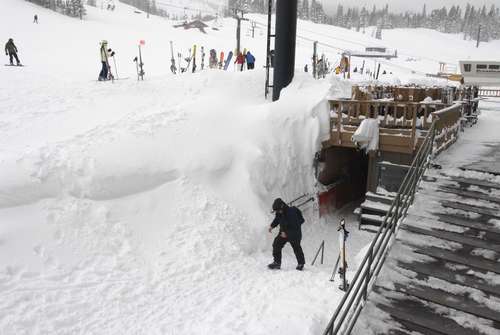
Arapahoe Basin is still holding on, with a respectable 67-inch base. But check this out - Mammoth Mountain in California still has an 11- to 15-foot base. That's feet, folks. The resort plans to stay open until July. (Check out the picture - this deck is usually 20 feet off the ground.)

Victory for the little guy

The little guy can relax, at least for now. The National Park Service won't increase charges for wildlife photographers and other small independent filmmakers within the national parks. A new fee schedule that was supposed to begin this month would have charged filmmakers $150 a day, up from $200 a year. But a spokesman for the Department of the Interior said that rate was designed for big-time filmmakers. The newest policy says the little guys won't have to pay location fees.

Godsend or eyesore?

National Park Service officials are developing a plan to cover new wireless towers, antennas, Internet and radio services in Yellowstone National Park.

Some applaud it as a way to make a park visit easier. Others believe it is an unwanted intrusion. A cellular tower built in the Old Faithful region five years ago drew criticism from advocates of the environment and historic preservation. It was eventually shortened 20 feet from its original 100-foot height so it was less visible.

What do you think about cell phones and national parks? Do you feel unprotected when your phone doesn't work? Are you relieved to be in a place where no one is on the phone? Are you offended by the idea of the phones themselves, or the unattractive towers they require?

Keeping the Ute Mountain Trail Open

The mouth of the Ute Mountain Trail, which leaves from a small lane between the Cog Railway parking lots and a batch of rundown cabins in western Manitou Springs, may be closed when the cabin area is re-developed into condos. At least that's the concern of many Manitoids who love using this historic trail.

Jonathan, one of our readers, e-mailed to say there are public meetings about the development happening, starting today, for anyone who wants to add their two cents.

Here's a schedule from him:

The public comment is scheduled today from 5 to 7 at the property (top of Ruxton Avenue just east of the cog). The planning dept. meeting is May 10. The city council meeting is May 23, I believe.

I would like to encourage anyone who is concerned to stop by one or all of the meetings.
Contact Jonathan for more info: 719-473-8844

Barr Mountain Race almost full


Apparently some of the popularity of the Pikes Peak Ascent is spilling over to the Barr Mountain Race, which happens a month earlier and only goes halfway up the mountain.

At 10 a.m. the race was 65% full (140 spaces left). It may fill up by the end of the week, or even the end of the day, so if you're thinking of giving it a try, either as training for the ascent, or as a less burly alternative, you better move. The race costs $20. 100% of fees go to benefit local nonprofits (can't beat that).

To register, click here.

On Everest: getting the gods drunk and pushing to Camp 4

We have another update from local climber David Lien on Mt. Everest. All seems to be going well:

We’ve completed one of the first major hurdles of this expedition over the last five days by moving up beyond Advanced Base Camp/Camp 3 (20,992 ft.) to Camp 4 (22,960 ft.), high atop the North Col. As I stated in my last update, this is where the suffering would truly begin, and it surely did.

We left Base Camp/Camp 1 for Intermediate Base Camp/Camp 2 on 27 April, spent the night at IBC, then continued on up to Advanced Base Camp/Camp 3 on 28 April. After spending two nights in ABC, we started the most difficult hurdle of our expedition so far: climbing the North Col. up to Camp 4. This camp is located at a point higher than any place in the western hemisphere, where Aconcagua in Argentina tops the highpoint list (22,800 ft.).

Reaching the Col. was one of the major goals I set for myself in joining this expedition. From this point on, every foot of altitude gained will truly be icing on the cake. However, before departing ABC for the North Col., we had to complete our Puja (blessing) ceremony. This was conducted by a Lama from the Rongbuk Monestary, who passed on traditional blessings from the Dali Lama for a safe and successful expedition.

Part of the ceremony included the blessing of our climbing gear, along with lots of food and drink, alcohol included. The alcohol used in the ceremony is intended to get the bad gods drunk, distracting them so that they do not interfere with our expedition. Having gained some firsthand knowledge of beer over the years, I took exception to their use of Budweiser to entice and distract the bad gods. However, it should make them sick at a minimum, and hence less able to pay much attention to us clamoring up Mt. Everest.


The ceremony lasted about two hours, after which our personal Sherpa-guides were ready to lead us op the ominous looking North Col. Most of us have hired personal Sherpas to guide us every step of the way above Advanced Base Camp (ABC), and all of them have been to the summit. From now on, every time we venture above ABC, our Sherpa-guides will be with us, watching over us, carrying the heaviest of our combined climbing gear, and doing everything within their ability to get us to the summit and keep us alive. The strength and stamina of these local Himalayan climbers is truly astounding, as is their capacity for expressing general happiness and generosity while in the midst of very harsh and difficult conditions. We are truly privileged to have them with us.

Once we reached the base of the North Col. and clipped into the first of the many fixed lines leading us to the top, and providing a safety “net” should we slip and fall, we spent approximately three physically demanding hours working our way towards the top of the Col.

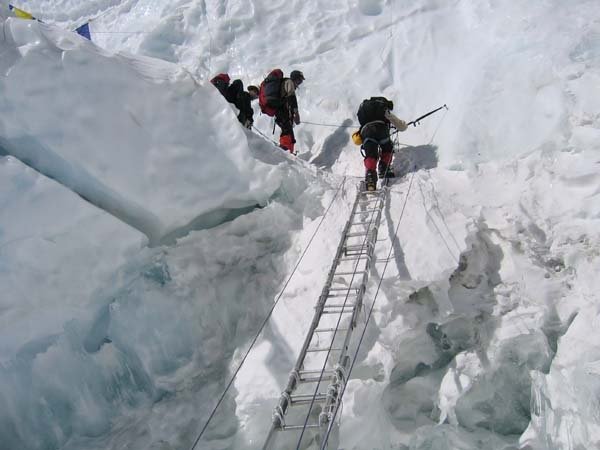
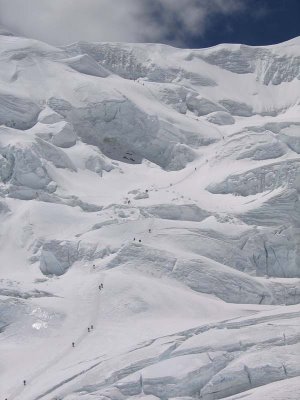
From ABC, the line of climbers ascending the Col. looks like slowly moving ants; up close, like slowly moving people. After topping out on the Col., we still had to cross a laddered crevasse and climb a bit higher to our tents. At Camp 4 we piled into a cramped mess tent for some liquids and food before retiring to three-person tents to get into sleeping bags and warm up. Above ABC, you do not use a personal sleeping bag, but bags that are placed at the camps by the expedition and used by whoever is in camp at the time. So, you never know who has been there before you or how sick they might have been, and what you might catch as a result. This is the way it’s done. The higher up you go, the less each climber can bring individually; the less you want to bring individually. Each step is a struggle, so less is more.

It was only about 7:30 p.m. when we retired to our tents, and we would be in the tents resting and “sleeping” for the next twelve hours. Given that we were now at another new high altitude for the expedition, all of us knew what the night would bring: altitude headaches, delusional-like dreams, and very little sleep. It was one of the longest twelve hours I have ever had to endure, but we will have more such nights ahead, each more intense and uncomfortable than the last as we reach new altitude highs.

After one night at Camp 4 on the Col., we returned to ABC and then all the way down to BC to rest and recover. Next, in a couple days, we will start back up to ABC, then to Camp 4 again (22,960 ft.), then on to Camp 5 (25,256 ft.) for another night of suffering (due to experiencing a new altitude high), then back down to Camp 4 for a night, then down to ABC and back on down to BC to rest and recover again. From BC, we will all choose towns even farther down below BC to visit for several days to get fully rested for summit pushes. Meanwhile, our Sherpas will establish Camp 6 (27,224 ft.). Sometime between May 15th or 20th we will all move back up to ABC and start looking for breaks in the weather. Those of us who are still healthy will attempt to move up to Camp 6 and make summit attempts.

After a night up at Camp 6 and a summit attempt we will have run out of strength and oxygen for a second attempt. So, everything has to work out perfectly. It’s a one shot deal, even after having endured so much just to get to that point. Even if our expedition consisted solely of the world's greatest and most capable mountaineers, it’s possible that not many of them would make the summit. Such is the temperament of Everest. You do not storm her flanks and conquer her summit, you sneak past her, timid and frail, hoping she decides to take pity on the weak and insignificant creatures crawling toward her top. It’s a game of chance, of calculated risks, but life is not without risks, you learn to take them or you stay at home and watch life on television.
Step by step, David

Wednesday, May 03, 2006

Local on Everest, well, almost


Local climber (and bank auditor) David Lien is attempting Mt. Everest from the north side (China). He's sending e-mail updates when he can. Here is the latest:

Hi, All. We arrived in Camp 1/Base Camp (BC-17,056 ft.) on 18 April with dark grey skies above along with falling snow being whipped up by strong wind gusts, and without having yet seen Mount Everest. However, during the evening of our second day in BC the weather started to change. Although I had no knowledge of the local weather forecast, I climbed the snow-covered ridge above camp in hopes of sighting Everest if the system was on its way out. It was.

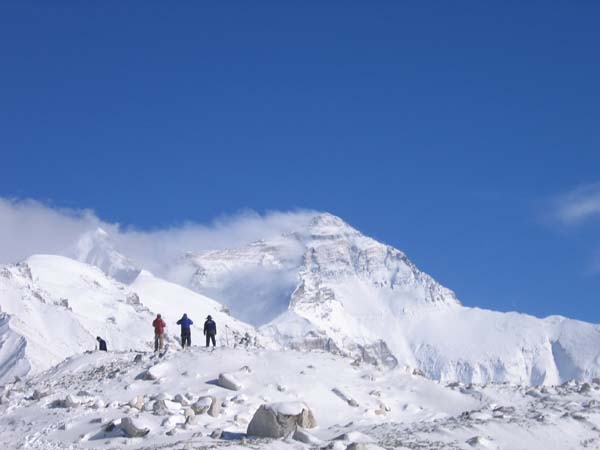
I watched in awe as the clouds cleared, revealing a monstrous and breathtaking scene: 29,035 ft. Mt. Everest covered with a fresh layer of snow and with a snow plume stretching out for possibly a mile whirling off its summit. The brawl of the wind and snow had given way to a breathless, exhausted peace. To quote Edward Abbey, the mountain glittered under the sun with that harsh perfection characteristic of God’s early work. That single moment has already made this expedition a complete success for me. All the rest will just be icing on the cake.

As described by Matt Dickinson in "The Other Side of Everest": “From the south, Everest is shy and elusive…Crowded as it is, by Nuptse and Lhotse, you have to climb right into the Western Cwm, above Base Camp, before the Southwest Face is truly revealed. Even from Kala Pattar, the famous Everest viewpoint for trekkers, only a frustrating potion of the mountain is visible.”

“From the north, Everest does not hide behind any veil, it reveals itself in all its glory with no preamble or guile. It just sits there alone, proud and magnificent, a pyramid of rock, sculpted by the most power forces on earth over millions of years. No other peak encroaches on it - none would dare. It effortlessly fills what seems to be half of the horizon. The view from where we stood left no room for any doubt at all: This was the ultimate mountain.”

Soon, a few others from camp joined me and we watched the changing panorama in the late afternoon light as though Everest was a physical addiction we couldn’t turn away from. After maybe 30 minutes, the sun dropped below the surrounding mountains, decreasing the temperature by 5-10 degrees almost instantly, and sending us scurrying back down to BC and into our tents. Due to the number of climbers in our expedition, we have divided up into two groups.

On 22 April, our group started the climb from BC/Camp 1 (17,056 ft.) up to Intermediate Base Camp (IBC)/Camp 2 (19,024 ft.) along the Rongbuk Glacier and East Rongbuk Glacier. After spending one night in IBC, we continued up to Advanced Base Camp (ABC)/Camp 3 (20,992 ft.), covering a distance of about 10 miles from BC to ABC. ABC is higher than North America’s highest mountain, Mt. McKinley, and the highest altitude most of us have ever “slept” at, if you can call what we experienced sleep. Sleep is increasingly difficult the higher up you go, for a number of reasons: altitude headaches, loss of appetite/upset stomachs, irregularity (diarrhea), and cold. In the worst cases, cerebral edema (brain swelling) or pulmonary edema (lungs fill with fluid) occur. Several of our expedition members had to be assisted down from either ABC or IBC with the early signs of these two potentially deadly reactions to altitude.

So far, I am doing well overall and have experienced only mild, short-term altitude headaches and overnight upset stomachs. However, the first night at ABC was a difficult one for all of us. At times like that, as you spend entire nights awake, feeling the uncomfortable impacts of the altitude and occasionally making late night dashes for the bathroom (if you can call it that) with bouts of diarrhea, you sometimes questions what you’re doing up so high, so far from home.

Although I climb mountains for many reasons, as JFK said about going to the moon, we do these things not because they are easy, but because they are hard. And I have found that nothing truly good or pure in life comes easy. Aiming high and hard work are prerequisites for living a good and decent life, and for endeavoring to make a difference rather than just existing. As Teddy Roosevelt said, “I have never in my life envied a human being who led an easy life; I have envied a great many people who led difficult lives and led them well.”

Having said all that, we obviously have some very difficult days and weeks ahead. One of our expedition’s climbers, who was also here last year, captured the essence of what lies ahead when he said above IBC/Camp 3, “it’s about the suffering.”

Tomorrow we will leave BC for IBC, then ABC, and after spending two nights there move up to Camp 4 (22,960 ft.). It’s above ABC/Camp 3 where the real “suffering” and danger begins here on the north side of Mt. Everest. After one night of what is certain to be a cold and uncomfortable night at Camp 4, we will descend back down to BC and rest before repeating the entire process again, but moving up through the lower camps faster and then above Camp 4.

My next update should come on Monday or Tuesday, after we return from Camp 4. Step by step, David Edward Abbey: “The high forest has its charms, but I think I love most the timberline regions. The taiga, the tundra, and the tarn. Here the trees are few and scattered, growing close to the earth. The world opens out and one begins to understand what we’re doing here.”

Tuesday, May 02, 2006

Pay to shoot?


Wildlife photographers say it's the end of beautiful pictures of beautiful places. National park officials say it had to be done.

Under a law passed in 2000, the Department of the Interior has to charge location fees for filming on public land. The bill, say park officials, was designed as an impact fee. Photographers now pay $200 a year plus fees for park services or assistance they need. Interim fees to comply to the law would charge them $150 a day for filming in national parks. Filmmakers say the agency is lumping together small independent filmmakers and big commercial production companies, and it's not fair.

The permanent fee structure will be released to the public in a couple of months; the interim fee goes into effect May 15, with a 30-day comment period. For a photographer's take on this new law, check out www.nppa.org/news_and_events/news/2006/04/fees.html

Monday, May 01, 2006

A bear of a list


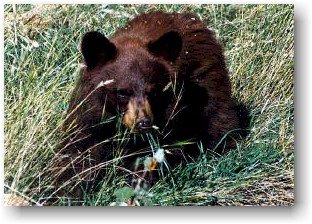
Because we love lists, we found this list of documented bear attacks on people since 1998, compiled by the Colorado Division of Wildlife, compelling. A common thread: These guys are animals.

May 17, 1998: Male hiker attacked near Garden of the Gods in Colorado Springs. Puncture wounds on his hip and scratches on his arm.

Sept. 18, 1998: A 53-year-old male hunter attacked in Lake County. Bite on the foot.

Aug. 4, 1999: A 56-year-old hiker was attacked after surprising a sow and her cubs in the Sangre de Cristo Mountains. Puncture wounds and scratch marks to his foot, ankle and leg.

Sept. 13, 2000: A bear on Grand Mesa bit one hunter on the buttocks and another on the hand and leg. A third hunter shot the bear in the abdomen, killing him.

July 8, 2001: A 16-year-old was attacked as he was sleeping at a campsite west of Gardner, where the bear was accustomed to finding food. Scrapes and several puncture wounds.

July 24, 2001: A scout leader was attacked in her tent as she slept by a black bear in Chaffee County; bites and scratches.

Aug. 2, 2001: A 17-year-old boy scout was injured in the back after a black bear entered his tent in at the Packerd High Adventure Scout Camp near Poncha Springs.

August 21, 2001: A 21-year-old attacked in his sleeping bag at the Lake Creek Campground. Bite on hand and injuries in the head, back and upper-right arm from the bear standing on him.

August 27, 2001: A 41-year-old woman was injured in the head by a black bear who swiped through the tent looking for food.

September 9, 2001: A 28-year-old hearing impaired man was hit by a bear from behind after coming in between a sow and her cub. Minor scratches and a strained knee.

September 20, 2001: A 48-year-old woman was attacked by a bear who jumped up and down on her a couple of times in Durango. Bruises.

October 5, 2001: A 20-year-old man was attacked while sleeping outside at a campground near Great Sand Dunes National Monument. Bite on right foot.

June 29, 2002: An 11-year-old boy attacked by a bear who ripped open the tent, stuck his head inside and bit the boy on the right leg.

August 20, 2002: A student camping in Mount Evans Wilderness Area with a group from his school was jumped on by a bear rampaging through the campground.

August 22, 2002: A bear came down on top of a tent and inadvertently put a one-inch scratch on the male who was sleeping in the tent in Teller County.

July 5, 2004: A federal wildlife agent attacked by a bear he was tracking in Gunnison County. The bear pulled the agent down bythe leg and bit him a couple of times on all four limbs.

July 28, 2004: A 19-year-old woman was rolled around by a bear that had entered her tent in Larimer County. Bruises.

Aug. 8, 2004: A woman was swiped by a bear on her porch in Larimer County. (She did not require medical attention and DOW officers described the incident as a non-aggressive encounter)

Aug.19, 2004: A female bear rummaging through a Garfield County cabin bit someone in the left foot after being startled.

Aug. 31, 2004: A sheep herder was bit on the leg and arm by a bear after trying to keep the bear from attacking his dog in Montrose County.

September 11, 2004: An elk hunter was swatted from behind by a bear as he was sitting on a stump. (The hunter did not require medical attention and the bear was not treated as aggressive)

July 13, 2003: Two campers were injured by a black bear at Rocky Mountain National Park. One man suffered a bite to his forehead and another required 30 staples in his skull.

July 19, 2005: A 14-year-old boy was attacked near Coaldale as he was sleeping in a tent. The boy was bitten on the left hand.

July 31, 2005: A 40-year-old man was mauled by a black bear north of Cripple Creek as he was sleeping in a motorhome. He suffered lacerations on the head and back.

September 19, 2005: An 85-year-old woman was attacked in her yard in El Paso County by a bear she had been feeding.

April 26, 2006: A 29-year-old man was attacked by a bear after leaving an outhouse. He suffered bruises and possible nerve damage to his neck and shoulder.

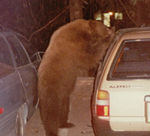
(Thanks to the Colorado Division of Wildlife for the bear photo by Joyce and Walt Wolff. There's no indication the bear shown attacked anyone in any way.)
Pikes Peak puts its best face forward

It's a well-known fact: The Woodland Park view of Pikes Peak is the best view. That side of the mountain looks a little more majestic, and you can see the W's of the highway and the area favored by the hard-core skiers and boarders who look forward to the rocky peak's challenges each springtime. (Check out the image from www.pikespeakcam.com favorite images, submitted by LRB.)

This morning, the face of Pikes Peak again is covered with snow, thanks to storms over the weekend.

Friday, April 28, 2006

Beware the grouse!


This just in from Teresa, one of the caretakers at Barr Camp: Beware the grouchy grouse!

Teresa writes:
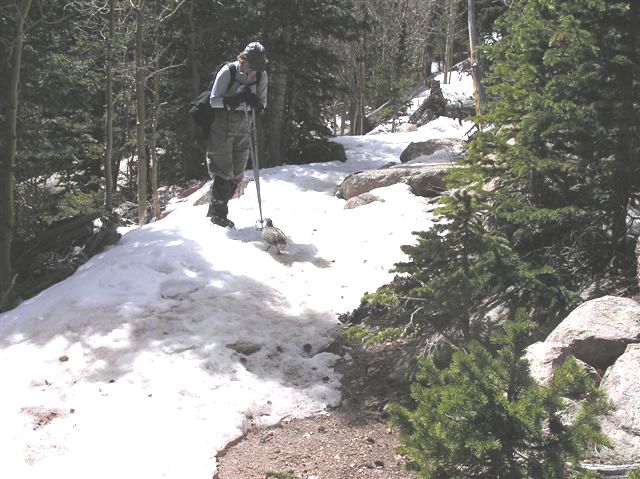
Hikers on Barr Trail beware! There appears to be a mated pair of blue grouse nesting just above the Bottomless Pit sign. Reports of people being henpecked on the hike through the area are true, sort of! The male blue grouse has been pecking at hikers' lower legs as they pass through his kingdom. Chivalry is not dead!

As if aggravating hikers is not enough, Mr. Grouse then follows them up the trail for fifteen minutes, making sure they understand his intentions that no one intrude upon his turf! A yellow eyebrow patch identifies the male grouse. Small and not well defined, it puffsup as he attacks. Full-blown attire for warfare is a flared tail featuring grayish white feather tips, and a puffed up neck exposing deep blue neck sacs. There have been no reports of the deep droning sounds the neck sacs help to produce. Not all those chased by Mr. Grouse have seen the neck sacs exposed.

According to the Golden “Birds of North America”, grouse are very capable runners. Perhaps there is a spot for him in the Pikes Peak Ascent, as his training on Barr Trail at over 10,000 feet has to put him ahead of runners from places like Florida!

Not to be Outdone
Mr. Grouse seems to have a young cousin who lives near Barr Camp. The caretakers awoke to a loud noise at sun-up. Upon inspection, they found a male blue grouse in full regalia attacking his reflection in the cabin windows. Two trips around the cabin with stops to body slam the window panes apparently tired him. He decided that sitting on the roof for a few hours was a safe place to rest as he had chased the “other guy in camp” away. Poor bird, the sunlight changed and there were no more reflections to fight off!

It is springtime in the animal world. You never know what you will find!

Fast food, bear-style


This is one of those bear-eats-man's-lunch stories that deserves telling: A 29-year-old man from Farisita was working on a private ranch west of Trinidad on Wednesday when he stopped to use an outhouse. While he was away, a bear climbed into the open windows of his car. The man's lunch was on the front seat, and the bear ate it, then got out of the car.

As the man returned to his car, the bear hit him and knocked him to the ground. The bear ran away but then turned around and came back toward the car. The man, Harold Cerda, says he started his engine so he could roll up his electric windows. "All four windows were down and they go up real slow," he said. "I got them closed just in time."

Cerda took some pictures with his cell phone. He was later treated and released from a Pueblo hospital.

The Colorado Division of Wildlife used the incident to remind residents that bears aren't stopped by the fact that food they want is in a car. If you've ever camped in Yosemite National Park, you've probably seen the video of a black bear systematically tearing apart a car to get to a cooler.

Snow alert

If you're planning a hike or bike ride this weekend, check before you go. It's snowing right now from Cascade west on Highway 24. By 10 this morning, Woodland Park had two inches of heavy, wet stuff.
It's also snowing on Pikes Peak, where the highway is closed at Halfway Picnic Ground. (So skiers hoping to get to Devil's Playground are out of luck, at least today.)

Thursday, April 27, 2006

Wheel fun


If you haven't already dusted off your bike and given it a tune-up (for tips, see Out There of March 31), do so now. Then head out on your favorite trail. The photo is from the recent trip Dave Philipps and photographer Christian Murdock took to Moab. (I'm posting while Dave's out and about - Dena.)

For a local ride, check out this Happy Trails feature from our archives. For more trails, see our Web site and check upcoming issues of Out There, which appears every Friday in The Gazette.

Pine Valley Ranch

Where: Part of the Jefferson County Open Space program, Pine Valley is near the town of Pine off Road 126.

To Get There: Take U.S. Highway 24 west to Woodland Park. Turn right on Colorado Highway 67. At Deckers, curve left on Road 126. Stay on 126 to the town of Pine, then turn left on Crystal Lake Road. Follow signs to Pine Valley Ranch Open Space.

Trip Log: ONE BOOT. Total distance hiked on three trails, about 5 miles: Narrow Gauge Trail, about 2 miles; Pike View Trail, about 1 mile; Buck Gulch, about 2 miles.

The Hike: This is part of Jefferson County Open Space, which means it’s well-marked and well-maintained with a huge parking lot. A total of 820 acres, it’s one of the county’s smaller properties, but hikers can explore about five miles of trails, and bikers can use one of them to hook up to other Forest Service Trails within the nearby Buffalo Creek Mountain Bike Area.We explored three trails within this park.

Narrow Gauge is the easiest, and on dry days would work for wheelchairs or strollers. Its surface is wide, flat and smooth, and it meanders along the shoreline of the North Fork of the South Platte River. Birds are plentiful, and on a sunny Sunday, eight snakes crossed the trail (six garters and two smooth green).

Buck Gulch is a trail that connects to other trails outside the Open Space boundary. It’s narrower, and favored by the bicyclists who love this park.

Park View is a single-track trail that’s for hikers only. It climbs through thick forest from the shore of picturesque Pine Lake to a rocky outcropping of broad granite boulders perfect for that afternoon nap. This trail is steep, with 300 steps installed on its steeper portions.

Information: This is a great park for non-hikers as well as hikers or bikers, with a stretch of wide, paved trail; handicapped-accessible fishing docks on the lake; bridges that cross the North Fork of the South Platte, and a public observatory that offers regular programs. Jefferson County Open Space, 1-303-271-5925.

Rathing System: A scale of one to four boots. One is easiest, with little elevation gain, and it is at a reasonable altitude. Four is most difficult, with severe elevation gain, difficult terrain or extreme length.
-Deb Acord, The Gazette

Starfish alarm

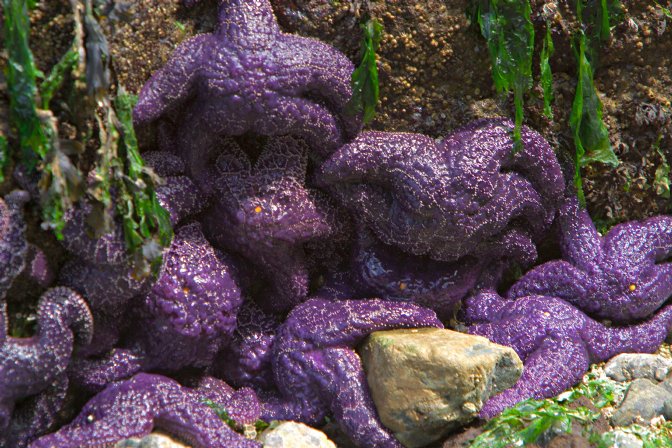
It's another blow for biodiversity. Hundreds of starfish have been found dead in British Columbia. Scientists believe a nonnative parasite is to blame. Purple sea stars began washing up on the beach last week north of Vancouver.

Why should we care? It's that web of life thing - sea stars eat mussels and barnacles, making more room in intertidal zones for creatures that support other marine and bird life.

Bird brains

If you've ever listened to a crow bark like a dog or sing like a songbird or yell like a woman, you probably weren't suprised to read about a new study that shows that birds have a talent for language, and can be taught to recognize and distinguish grammar.

University of Chicago researchers found that European starlings could be taught to recognise the difference between a regular birdsong sentence and one containing a clause or another sentence. In a study published in the journal Nature, the researchers show how songs that birds have learned to recognize trigger responses both in individual neurons and in populations of neurons in the bird’s brain.

This is serious business for the birds, the researchers said. Daniel Margoliash, professor of organismal biology and anatomy and of psychology, and co-author of the paper, said the ability to match a singer to a song, often down to the level of an individual bird, can mean the difference between "a day spent wrestling through the thicket and one spent enjoying a sun-soaked perch, or the missed chance at mating with the healthiest partner around."

Casinos and canyons

In the why-didn't-we-think-of-that department: A new Las Vegas resort combines all the glitz and glamour of the Strip with....rugged adventures. Red Rock Casino, Resort and Spa is 10 miles from the city near the entrance to Red Rock Canyon, a scenic national conservation area. The resort has the traditional spa where you can be pampered, the traditional over-the-top decor, dining and nightlight, and then it has an Adventure Spa that offers guided horseback riding, hiking, climbing and mountain biking (at Vegas-appropriate prices - a sunset horseback ride is $119). Check out www.redrocklasvegas.com

Wednesday, April 26, 2006

Stop to view the flowers

Are you ready for the Tour? That's the Tour de Fleur, a wildflower tour of Colorado State Parks. The Parks Department came up with the catchy name to publicize wild wildflower shows at 21 parks throughout the state.

The Tour features eight wildflowers and bookmarks featuring the flowers at each of the participating parks. Go to www.parks.state.co.us, click on Tour de Fleur and print a wildflower map.

So far, we've only seen the pasque flower at higher elevations. Let us know which flowers you've seen in your favorite park or wild area.

Where the deer and the black bears play

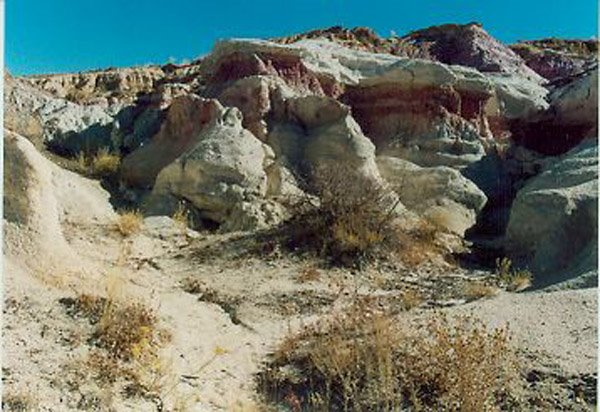
Doesn't have quite the same ring when sung to the tune of "Home on the Range," but we've gotten a report of bear tracks at the Paint Mines, a windswept county park of sandstone spires and hoodoos on the eastern plains near Calhan.

A Colorado Division of Wildlife spokesman says he hasn't heard of any bear sightings around Calhan, but it could happen. Bears have occasionally wandered east from the tree-covered foothills - one even made it as far as Limon several years ago. The usual scenario: they are young ones that denned with their mothers for the second winter, but she has kicked them out. Feeling a little lost, they wander eastward.

If you see a track at this park, take a photo and send it to deb.acord@gazette.com

Tuesday, April 25, 2006

CSI, Mountain Lion


I just got this press release from the Division of Wildlife. All I have to say is, if you can't prove he bit, you must acquit. Too bad the accused has already been executed...

DOW RECEIVES INCONCLUSIVE TEST RESULTS ON MOUNTAIN LION

The Colorado Division of Wildlife has received the results of the necropsy on the mountain lion that was killed after the attack on a 7-year-old boy last week. While evidence shortly after the attack indicated this was the lion involved, results from further testing were inconclusive.

A protein test was conducted to look for human blood on the lion. Twenty-one samples were taken from the claws and the mouth area of the lion. However, human blood was not detected in any of the protein tests conducted.

“We are still confident that this is the lion that attacked the boy,” said Tyler Baskfield, public information specialist for the DOW. “We know that this lion was tracked from within 30 yards of the attack site, we know that this lion was killed within a half-mile of the attack site nearly 6 hours after the attack took place. We would like to be able to say for certain that we killed the right lion, but unfortunately all we can say is that these protein tests neither confirm, nor disprove that this is the lion that was involved in the attack. The rest of the evidence points to the fact that this is the right lion.”

While DOW officers were on scene about 2 hours after the attack, the lion ran by the officers who were standing near the attack site. A shot was fired by a Boulder Open Space and Mountain Parks Ranger. Officers are not sure if the lion was hit. Returning to an attack or kill site is normal behavior for lions.

The highest recorded density of adult mountain lions in a North American study showed between 3.5 and 4.6 lions per 100 square kilometers. So the odds of another lion being this close to the attack site are low even if the lion density in this particular area is high. The trained tracking dogs didn’t indicate any other trails or lion tracks in the area.

The female lion was about 5 years old, weighed 84 pounds and was in excellent body condition. Rabies analyses were negative on the brain of the lion. The lion’s stomach was found to contain the remains of a rabbit estimated to have been ingested five or six hours earlier. It is believed the lion had born kittens in the past, but was not nursing kittens at the time it was killed.

“There are an infinite number of scenarios that could have had a factor in why these results were inconclusive,” said Baskfield. “Typical lion behavior could have destroyed evidence in the six hours before we were able to kill the lion. Lions tend to groom themselves. They will extend their claws while traveling, especially when trying to flee what they perceive as a threat such as the tracking dogs.”

Turkey business

A hunter who thinks another hunter is a deer or an elk? I can see how that could happen. But thinking a hunter is a wild turkey? Not so probable.

Even so, a man hunting turkeys on the Uncompahgre Plateau on April 22 was accidentally shot by another hunter. The man's injuries were minor, but the incident prompted this alert from the Colorado Division of Wildlife: "Know what you're shooting at."

The DOW says turkey hunting is actually riskier than other hunting activities. Hunters dress in camouflage and use calls and decoys that often sound or look like the real thing. In the Western Slope incident, the man who was shot was trying to call in birds. The man who shot him was 50 yards away, and says when he saw movement in the bushes, he thought it was a turkey.

Rolls off the tongue

Versus.
That's the new name for the Outdoor Life Network. Network president Gavin Harvey explained the change: “Versus is a word that perfectly captures the essence of our brand. It is immediate shorthand for competition and has a range that can suit everything from stick and ball sports, to bull riding, to field sports."

“We felt it was a slam dunk, and sports fans we talked to all agreed.”

The network statement: "Whether it is man versus man, man versus beast or team versus team, the channel will celebrate sports at its best, where athletes and sportsmen compete at their highest levels with the greatest passion.”

Whaling? Still not popular with outdoorsy types.

Outside Magazine shared an in-depth look at the Norwegian whaling industry in May, which is made up of a fleet of small boats with a catch tightly monitored by the government. The take away message from the piece was that the whale population in Norway is healthy and the catch is sustainable, but it's still a bloody business, and the writer said he never wants to see it again.

Outside put a poll on its Web site asking readers, "Should commercial whaling be illegal worldwide?"
I came away from reading the story thinking, in some cases, maybe it's OK, if the fishery is healthy and the take is controlled. Yet 89% of Outside's online respondents said commercial whaling should be illegal in all cases.

I can't help but think most of them didn't read the story (especially since it's not posted for free online). Generally, opinions that include words like "all" and "never" are built on a poor understanding of an issue.
Still, if commercial whaling was allowed, I think I'd skip the whale aisle at the supermarket.

Monday, April 24, 2006

Elk in their sights


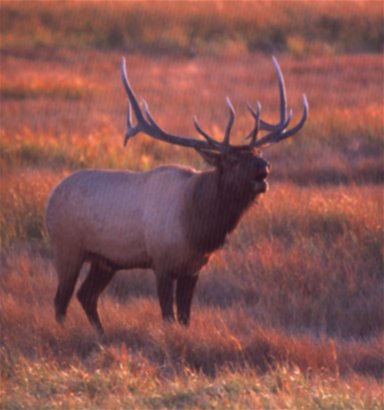
The Associated Press reports that Rocky Mountain National Park officials have proposed shooting hundreds of elk to reduce what biologists say has become an unmanageable population.

A draft elk management plan released Monday includes a recommendation to shoot 200 to 700 elk in the first four years - and then 25 to 150 annually for 16 years. The goal is to reduce the number of elk from about 4,000 to between 1,200 and 1,700.

Biologists say elk have overgrazed the park so badly that other animals and plants have been hurt by loss of habitat and food. Park spokeswoman Kyle Patterson said the recommended option includes eventually using wolves to rein in elk.
(Posted by Dena, for Deb and Dave)

Pulling the drapes

This just in: Fish don't care about art.
A biologist for the Colorado Division of Wildlife says that artist Christo's proposed draping of the Arkansas River won't hurt the fish. If anything, the draping project will offer a little protection for the fish, because anglers will have a hard time getting to them. There's another potential problem, though - gawkers who get out of their cars along U.S. Highway 50 could contribute to an ongoing erosion problem on the riverbank.
The Christo project hasn't been approved.

For sale: scenic parcel of land


Great views, easy to get to. Ski resort living on...well...a ski resort.
With 470 acres of skiable terrain and 2,081 acres on Forest Service land.

Sunlight Mountain Resort is for sale. The resort, 12 miles south of Glenwood Springs, has caught the attention of several potential buyers, but so far, none has committed.
The asking price: $50 million. (That's just $1 million each for 50 of your closest friends.)

.

And then there were four...


The chutes on Silverton's scary Billboard Peak were closed all winter, but they're open now.
The number of open ski areas in Colorado has been shrinking as if they were finalists on "American Idol." Every week there are fewer and fewer. Breckenridge finished Sunday with its classic local events, the Imperial Challenge and the Bump Buffet.

Now only four areas remain open: A Basin, which often lasts until June (though rarely 'til July, as everyone claims); Silverton, which should have the lift up until mid-May; Loveland, which will be open until May 7; and surprise member of the longevity team Echo Mountain Park, which is open at least through the end of April and maybe longer.

This is also peak season for the state's big mountain backcountry skiers. The snow is stable, after a good winter, there's a ton of it, and the temps have warmed. In fact, Pikes Peak's own big mountain route, the Y couloir, is setting up now. Click here to see it up close.

Friday, April 21, 2006

Celebrate Earth


Tomorrow is Earth Day. Plant a tree, pick up litter in your corner of the world, or check out one of these celebrations around town:
** The Earth Day is Every Day Celebration with programs, crafts, a seed sale, storytelling, face painting and more, from 9 a.m. to 1 p.m. Saturday at the Fountain Creek Nature Center, 320 Peppergrass Lane, Fountain, $3, reservations required; 520-6745.

** Earth Day Expo and Film Festival, or 1-7 p.m. Saturday at Palmer High School, 301 N. Nevada Ave., free; 471-0910, ext. 102.

** There’s also Earth Day and Arbor Day at Rock Ledge Ranch and the Garden of the Gods Visitor and Nature Center. An Arbor Day ceremony is at 9 a.m. Saturday, with living-history demonstrations and more 9 a.m. to 3 p.m. at the ranch, at the entrance to Garden of the Gods off 30th Street, and the center at 1805 N. 30th St. Free; 578-6777.

Unrest on the Intemann Trail

The Intemann Trail in Manitou is one of the most-loved trails in the region. It's also easy to reach, so perhaps vandals who are too lazy to hike further into the mountains just concentrate their efforts there.

Over winter, all but one of the Red Mountain Spur Trail signs (off the Intemann) were stolen, as well as signs at the Iron Spring Trail, including the hand-made wood "Paul Intemann Memorial Nature Trail" sign and a map sign near the spring.

Other Intemann Trail news: According to the trail committee newsletter, hikers have been trespassing on landowner Steve Beisel's land, and an altercation between a hiker and Beisel ended in the landowner being charged with assault. If you hike the Intemann, be sure and follow the map signs - south of the Beisel property, the trail ends at Manitou Mesa Overlook, and north of it, the trail ends at the Crystal Valley Cemetery.

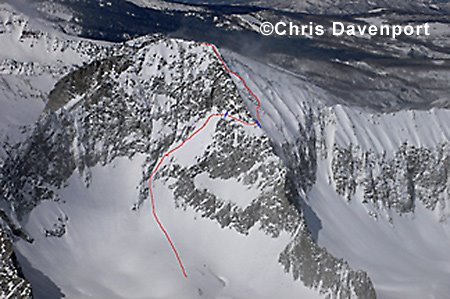
Davenport aces what may be the toughest 14er ski!


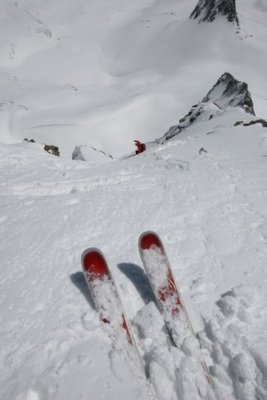
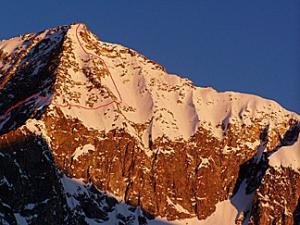
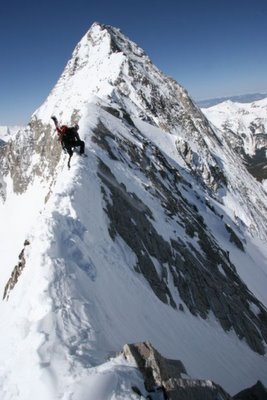
Chris Davenport, the Aspen skier who is trying to ski all of Colorado's fourteeners in one calendar year, did Capitol Peak yesterday. It's the toughest peak to climb in summer, by the standard route, and seems absolutely brutal in winter. There are no shortage of cliffs on the route that could spell adios if you made a wrong turn. Now it's done.
Here's another view of it:

Here's what Lou Dawson posted on his blog, www.wildsnow.com, this morning:
Both men described being "shattered" by a day of skiing bony no-fall terrain above 500 foot cliffs. The route was first spotted several years ago by Pete Sowar of Crested Butte, who's authored such new-wave lines as the South Face of Castle Peak. Pete has been up there a few times to try and piece it together, but never quite got it. Dav and Neal put it together, and from Neal's description (he called on the phone a short time ago) the descent sounded incredibly marginal. Basically, the route starts from the summit and follows my 1988 line a short distance down to the upper east face. Instead of skiing to the Knife Ridge as I did, it continues down steeper and more rocky terrain, eventually requiring a short section on foot (about 70 feet) to reach snow on the south east face, which is then descended to the Pierre Lakes bowl

Wow. We'll definitely try to tag along with this guy when he skis Pikes Peak.

Big winters linger


This just in: If you head to Idaho to bike or paddle, don't forget your skis

SUN VALLEY, Idaho (AP) — Idaho’s wet winter has made for one of the best ski seasons on record for the Sun Valley Resort. The resort still had more than 100 inches of snow in early April, typically the downward slope of the skiing season.

“It’s one of the best in the 40 years we’ve kept records,”said Jack Sibbach, marketing director for the resort. The snow depth on the top of Bald Mountain on April 3 was at 107 inches. Snow depth at its maximum this year was 282 inches before higher temperatures started compressing the snow. The resort plans to remain open until June.