Monday, June 26, 2006

At sunset, top teams finishing canyoneering section of Primal Quest

(A compass hangs at the ready for a racer's consultation along the route. Photo by Side Light/John Nantes, courtesy of Side Light, Nantes and Primal Quest.)


Two teams have now dropped out of Primal Quest due to injuries and exhaustion. Two more have lost team members to exhaustion but decided to press on unranked. The heat was up over 95 degrees today. Racers have now been going for about 38 hours.

None of this shows in the leading teams. After starting out with a whitewater swim this morning and switching to a long kayak down the Green River, they started a trek through the desert at about 2 this afternoon -- the hottest part of the day.
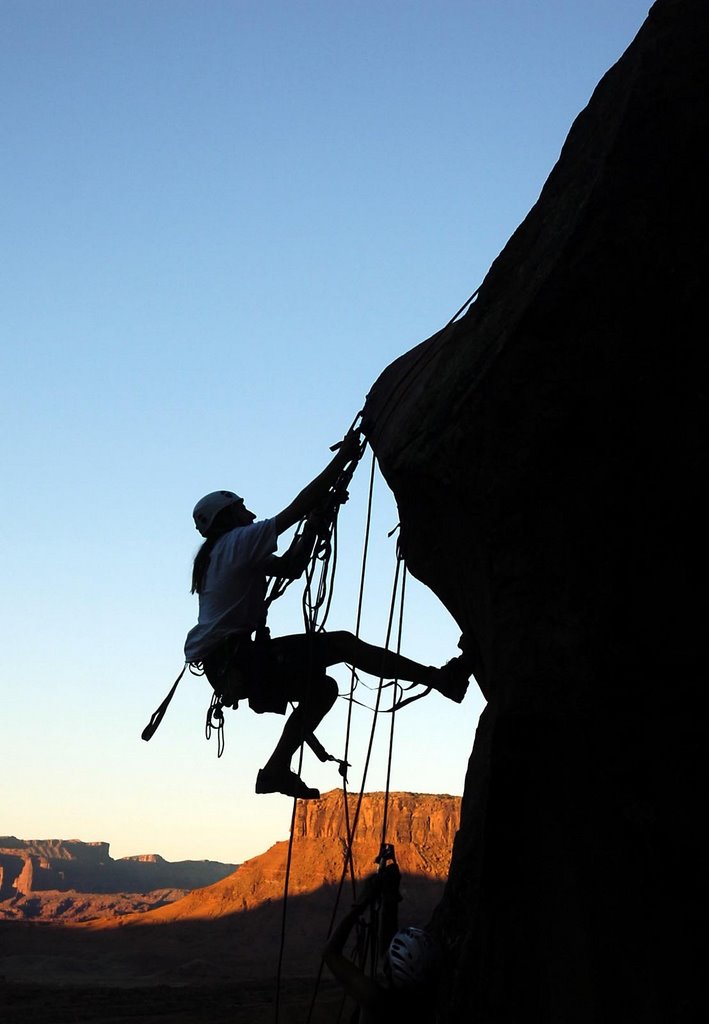
After almost three hours of cross country rambling, they jogged to a point where they had to rappel 330 feet down a sheer cliff to a canyon below.

The top five racing teams arrived at the rappel station at almost the same time. As they waited in line to get onto the ropes they seemed very calm, relaxed, even energetic. Most of the top racers have been doing big events like this one for years and know each other, so when they get together it's a reunion of old friends. Even though they had just clocked more hiking miles than most people will in a year, they spent their time at the station chatting just as friends would who run into each other at the store.

How's your wife? Did she get that job? Did you hear about so-and-so getting together with what's-his-name? Hey, nice bit of navigation back there, by the way, would you like some cookies?

There was no hint they were about to drop off a 30-foot cliff, then walk through the night, and in a few days, maybe reach down and scrape up the last shreds of their will to push past the person next to them and snag the $100,000 first prize that is the biggest in adventure racing. No hint at all.

Talk about an adventure


(Paula Waite, Tom Giese, Brad Brozek and Ivy McIver assemble their bikes for the first mountain biking leg that will take them through 65 miles of diverse terrain. Photo by Chuck Clark and courtesy of Clark and Primal Quest. Thanks guys!)

I haven't heard from The Gazette's Dave Philipps and David Bitton since about noon. They were headed into the heat of the Utah desert to catch up with the teams leading Primal Quest.

Keep checking back for news. For more details than we can share, head to Primal Quest's sweet web site. Photos are posted from pre-race, the amazing horse and rider start, desert trekking and the initial moments of the first mountain bike leg. The site also has details of the teams, the challenges they'll face in each leg, and a map where you can track the teams through GPS.

As of checkpoint 15 (6 p.m. Colorado time), team Spyder was still in the lead, followed by Merrell/Wigwam, Nike PowerBlast, GoLite/Timberland and Nike Beaver Creek. Looks like those teams were transitioning from canyoneering to ropes following the whitewater swim and paddling. Power up!

The not-so-peaceful forest


My college classmates who were studying to be forest rangers and wildland conservationists did so to get away from urban life. But it seems urban life is tracking them down.

Attacks, threats and other altercations involving Forest Service workers reached an all-time high last year, according to government documents obtained by a public employees advocacy group. We're talking everything from verbally abusive campers to someone pointing a gun at Mr. Ranger.

The agency tally shows 477 such reports in 2005, compared with 88 logged a year earlier. The total in 2003 was 104; in 1995, it was 34.

Public Employees for Environmental Responsibility obtained the documents through a Freedom of Information Act request and provided them to The Associated Press.

The environmental advocacy group said the government’s methods for collecting the data have not changed over the years. It said some of the blame for the growing violence in the woods is due to greater access to remote lands and waterways by motorized equipment. There's definitely debate over that.

"Most of the assaults in 2004 were as a result of encounters with drunks, drug
users or deranged environmental protesters," said Agriculture Undersecretary Mark Rey, who oversees the Forest Service.

To learn more about the report, visit the PEER Web site.

Ringtail? Check

If you spend any time in the outdoors, you probably keep a list, at least in your head - a list of wild animals you've encountered. My family's unofficial list starts off with mule deer and elk, and continues on with dozens of birds and animals we've spotted, watched or photographed through the years. (Among our favorites: a badger and an ermine, at two separate locations.)

Now we can add the elusive ringtail to that list (or at least my daughter can). She's a tour guide at Cave of the Winds, where ringtails, nocturnal members of the raccoon family, have been known to hang out. She spotted one of these little lemur-like animals in the sinkholes next to the gift shop. Cave of the Winds long-timers say the ringtails, easy to recognize because of their very long ringed tails, are great cavers.

In Primal Quest, the first team drops out


The 89 teams competing in the 417-mile Primal Quest adventure race near Moab, Utah, are now strung out over more than 70 miles of open desert and canyons. The first dozen teams are flying down the Green River in hot pursuit of one another, but others are just chugging along.

Sunday evening, the first team dropped out. Ironically, it was team Utah. No home field advantage, apparently. It wasn't the blistering 100-degree heat and no shade that stopped them, it was just plain blisters.

More teams are expected to drop out soon. I talked to course director Don Mann today. He said the canyoneering section after the kayak will "eat a lot of teams." He expects several to drop out afterward.

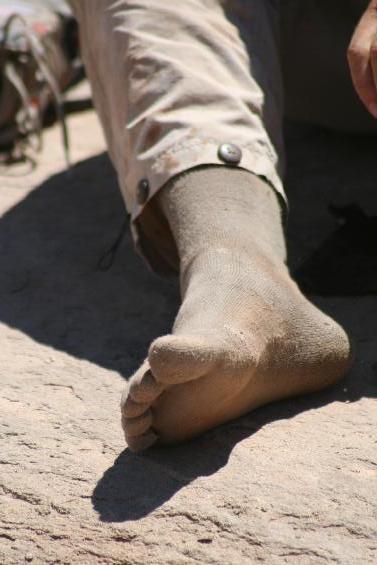
(In this photo by Jason Perreira, courtesy of Primal Quest and Perreira, a sock molds to the foot of Team Radioactive Beagle's Tom Sullivan. And that was Day One!)

After 100 miles, Primal Quest race begins again


(Frida Rosenberg of Team Halti holds on strong to her swim board. Photo by Side Light/Dan Campbell, courtesy of Side Light, Dan Campbell and Primal Quest. Thanks for the visuals.)


Mike Kloser, captain of Team Nike, said it best when he stumbled out of an eight-mile river swim at 8 a.m.

“The race starts all over today,” he said as he got ready for a 35-mile kayak.
He meant that his team’s 1-hour lead on the closest competitors had been erased by a “dark zone” – a checkpoint on the course where racers have to stop until first light. In this case, it was a whitewater “swim” on the Green River. The racers use super-sized kickboards to keep them afloat, so they’re not really swimming, but it’s dicey enough that you don’t want to do it in the dark.

Nike got to the dark zone at about midnight and unrolled their sleeping bags. During the night, 14 other teams caught up to them, and they all started neck and neck again. It probably only helped the other teams temporarily.

The first swimmers onto the beach were from Team Nike, followed quickly by a half-dozen other teams.

One strength of seasoned racers is efficiency in the transition zones. Nike had to get out, change clothes, put their swimming gear in the right pile to be taken down to a distant drop zone, get out paddling gear for the kayak, fill their food bags for the next several hours, and take care of any bumps and bruises - and not let their exhaustion make them dawdle. This all took about 20 minutes. No distractions.
Nike, Spyder (made up of racers from Boulder, Summit County and Australia) and Merril/Wigwam (made up mostly of New Zealanders) all paddled out at the same time. Nike had lost its advantage.

The teams are headed into a VERY remote area of the desert where they’ll do a mix of kayaking through Labyrinth Canyon on the Green River, and get out to run a course through some gnarly slot canyons.

We’re going to try to get in there to keep tabs on the racers. No promises though.
In the meantime, you can learn more about the teams and track their progress with a real time GPS map at www.ecoprimalquest.com.

Sunday, June 25, 2006

Primal Quest: Nike is through Green River

Photographer Dave Bitton and I just stopped to fill up the tank at the Shady Acres Gas and Groceries here in Green River, Utah, and noticed four very nice mountain bikes sitting outside. We went in and found team Nike sitting around eating hot dogs and fruit pies.

They seemed tired, but alert. No one else is even close to this Colorado team. They were heading up the road seven miles to get some sleep. They'll pretty much get a whole night's rest, which will give them a huge advantage over other teams still pedaling. We'll see what tomorrow brings.

Cool Whip dreams

The teams have now been racing for almost 11 hours. To see the leaders in real time, visit http://web1.ecoprimalquest.com/2006/race/leaderboard.

Each team carries a GPS transceiver that lets a live online map know where they are. This is one of the only easy ways to play spectator for this sporting event. The trail is just too remote to get a good look otherwise.

This afternoon in 95-degree heat, we spent hours reaching a checkpoint where the teams said goodbye to their horses after 23 miles, and started hiking through a long, open valley that, no joke, had not so much as a twig of shade. You learn a lot by going to the checkpoints, like that the Golite team was given a sick horse that has put the favored runners more than an hour behind the lead, or that the Salomon/Crested Butte Team's horse (Peewee) was slow until they realized "tapping it in the behind with a stick" could get it up to jogging speed.

At the 23-mile mark, reached at about noon today, all the teams still looked human. We'll go out tonight and see if the heat of the afternoon has drained away some of their humanity.

To give you an idea of what they're in for, one of the first things I noticed when showing up for PQ was a huge poster by the medical office explaining the findings of a study the lead physician had done the year before on "hallucinations in adventure race athletes."

The findings: 83 percent reported experiencing full-on hallucinations during the race. Most often they happened at night, brought on by sleep deprivation, and most often they included animals (40 percent) ghosts, wizards, friends and family, and, of course, food (10 percent).

The somewhat typical, if wired, sightings were "a short, fat German lady spinning a pizza" and "enormous tubs of Cool Whip hanging from trees."

It's ironic that the sport takes racers to such remote places at such weird hours that they are generally the only spectators there (even the made-for-TV helicopter crew cherry-picks shots in the best light). And yet even though they are the only ones to see it, often they aren't really seeing it - they're seeing Cool Whip.

In a cloud of dust and horse flesh, the race starts


At 6:31 this morning Primal Quest started as 94 horses and almost 400 racers gathered at the head of a small sage brush valley flanked by rocky, juniper-studded hills.

For live, real-time coverage, visit ecoprimalquest.com.

As the sun peeked over the crest of the hill and spilled out on the golden grass, a cowboy who had been resting his rifle on his hip raised his gun into the air and fired at the sky. The four-member teams surged forward, three on foot and one riding on the team horse. A plume of fine dust shot up from the clatter of hooves and sneakers and caught the light, making a glowing, golden cloak that wrapped horses and racers and turned them into fleet silhouettes. It was a moment made for television. A helicopter with TV cameras swept over the herd and the dust.

But it wasn’t quite the "Hidalgo" moment the race directors probably wanted. Few of the racers have much horse experience. They were mostly being led by a halter rope by a jogging racer ahead of them. The effect looked less like a Wild West roundup and more like Joseph and Mary trying to hurry into Bethlehem before the inn closed.

There were a few rodeo moments though, intended or not. At least three riders were thrown. The horses took off, galloping across the sage with team backpacks flapping on the saddle (and often flying off into the bushes). A few race-hired wranglers rounded up the animals and brought them back, but many of the racers spent several minutes looking for tossed-off packs.

The rest of the herd shot across the flats at a quick walk and poured into a narrow slot at the end of the valley, where the sage tumbled into a steep, rocky canyon.
They have to lead the horse for about the length of a marathon. Then they have to do the same distance without the horse. Then the bike.

There is a mandatory “dark out” at the whitewater swimming section on the Green. If teams get there after 6 p.m., they can’t swim the river until it gets light the next morning, so several top teams are going to try to slip in under the wire. It will be close.

(In the photo - by Denise Watkins, courtesy of Primal Quest - Vanessa Lawrenson of team IrishAR Inov-8 shows her steed who's boss.)

What a course! It's a greatest hits of Canyon Country.

A few hours before racers started the 450-mile Primal Quest at 6:30 a.m. the directors gave each team four maps showing the course. We got a peek at the course a few hours before the racers got to see it.
Man, it is cool.

It starts in the San Rafael Swell over 100 miles northwest of Moab with a 23-mile horse ride, then goes into a 23-mile “trekking section” – this can mean running or hiking. We’ll see what teams decide to do. From there it goes to a 60+ mile bike ride to a whitewater swim, to a long kayak down the Green River, to a long rappel over a cliff, to a wander through a narrow slot canyon.

It eventually ends up touring some of the best single track mountain bike trails around Moab and finally takes a few jaunts over the highest peaks in the La Sal Mountains east of town.

I’ve done most of the sections of the route at one time or another, but at a very different pace. The kayak they’ll do in a few hours, I took days to do. The tour of classic mountain bike trails took me years to check off. This is basically a Canyon Country greatest hits lineup – all the famous stuff in one big push. Very intense.

When it runs on TV this fall, it will look stellar. A fabulous backdrop at every turn. And when you see the list you can’t help but wish you were going along on this long expedition. Then you realize for much of it, the athletes will be too zoned out to really appreciate, or at least really enjoy, where they are. They’ll just have to come back and enjoy it later with a little more leisure.

Saturday, June 24, 2006

It's heating up at Primal Quest

Here at Primal Quest in Moab, I just saw team Spyder from Boulder packing their bikes up in hard plastic cases to be transported who knows where. When they get to a biking section of the 450-mile race, they'll have to find their cases among 95 different teams', then put their bikes together. Doesn't sound too hard, but when you've only slept two hours a night for three nights, choosing the right allen wrench to tighten the handlebars is a little trickier.

The big news, since no one has any other specifics to talk about until they tell us the course at 4 p.m, is the heat.

I talked to one of the EMTs who will be on the trail.

"We're scared," he said. "We were talking about it last night and with this heat... heatstroke is very serious.... You can get to the point where you fall apart on a cellular level fairly quickly. I'm talking about your proteins denaturing... and if you get there, mortality rates are like 80 percent."

The medical crews that will be at every checkpoint have been told to look for signs of heatstroke: confusion, lack of motor skills, nausea. Unfortunately, all these things pretty much are the symptoms of long-term racing too.

I talked to team Solomon/Crested Butte. They had a team member go down with heat stroke in Australia this spring. They had to carry him for over 5 kilometers to get him to a checkpoint where he was taken away by ambulance. He sat in the ICU for two days, sucking in fluids by IV.

"If you get to the point of heatstoke, it's game over. You can't just rest and recover," said Jari Kirkland, Crested Butte's navigator. "So we're going to be really conservative. You can't rush here. You have to be cool."

Being cool, of course, is relative. Crested Butte is a powerhouse team. Captain Jon Brown and Kirkland are both seasoned mountain bike racers who can go hard for hours on end and barely break a sweat.

The whole team is looking forward to hitting the mountain section of the course. Since they live in Crested Butte they are used to the altitude, and being up in the La Sal mountains at 12,000 feet should be a welcome break from the heat.

Will the race go through the La Sals? Probably. Buzz around headquarters is that racers are being bussed up toward Green River, Utah, and they'll finish with a loop through the La Sals that swings down to a finish line on the Colorado River.
Paddling finish? Crested Butte says that's what they're planning on.

Steaming hot

It's 8 a.m. in Moab. It's 75 degrees and not a cloud in sight. Today's high is expected to be about 100. Tomorrow will be just as hot. The furnace-red rock reflects the heat. There is no shade. Sort of ironic that Utah, with its burgeoning and devout population of Mormons, is the closest thing to hell in the lower 48.

Most competitors in Primal Quest agree the heat will be the biggest challenge. How can you race for 450 miles in this heat and not kill yourself? Some plan to sleep during the hottest part of the day like lizards. Some just say they'll hydrate like crazy.

The question is, can they drink enough in this heat and with their exertion level to keep up? I guess we'll find out.

Right now the teams are resting in the shade.

Friday, June 23, 2006

Primal Quest: the biggest mystery race in the US


We landed in Moab, Utah, today for the start of Primal Quest, which is sort of the Tour de France of adventure racing. The race starts Sunday morning and teams are pouring in to the desert to get ready and checked in. They've brought heaps and heaps OF gear with them and the race inspectors went through it all today piece by piece to make sure everything is present.

The race starts Sunday morning. What time? We don't know. Where does it go? We don't know. How long is it? We don't know. All we know is that racers will get on busses leaving from Moab on Saturday at midnight and when the busses arrive at a secret location (Vegas anyone?) the race will start.

Here's what we do know: The race has so many cliff scaling and rappeling sections that the race organizers have set up eight miles of rope!

That, paired with the fact that it's over 100 degrees in the Utah desert, should make for a very interesting race that pushes people to the limit.

More to come....

Views from the top


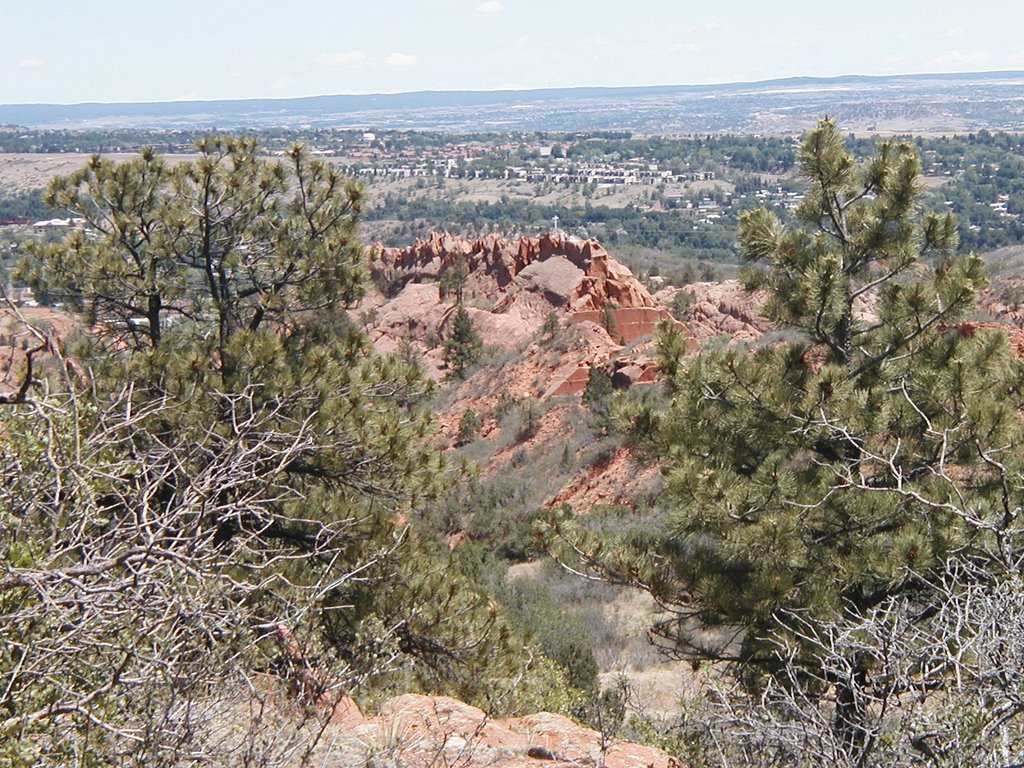
No, not the top of Pikes Peak. Red Rock Canyon Open Space.

I took my mom, who's visiting from California, up the Mesa Trail to the newish connection to Section 16 and Intemann trails. She loved the views, which I'm sharing here from my point-and-shoot.

It's a great hike for visiting friends and family who aren't used to the altitude. They get to see the red rock, cactus, scrub, oak and pines. And you're bound to see a deer or fox along the way.

Now that she's been here a week she's set her sights a bit higher. She'll be one of those tourists on Barr Trail's switchbacks this weekend - although she'll have plenty of water and snacks and be prepared for inclement weather. Check out Dave Philipps' story, teased in a posting below, if you're looking for an alternate route - away from the tourists and runners training for the Ascent and Marathon.

Ride the Rockies cyclist dies

A woman participating in the Ride The Rockies tour across Colorado died Thursday afternoon when she veered into a motorhome and was run over, the Colorado State Patrol said.

Diane Woolwine, 65, of Boulder died at the intersection of U.S. 50 and Chaffee County Road 111 on the western edge of Salida. Woolwine, who was wearing a helmet, was in a group of six cyclists stopped at a stoplight alongside the motorhome. When the light changed, Woolwine struck the motorhome and fell to the pavement under its wheels.

Ohhh, ahhh


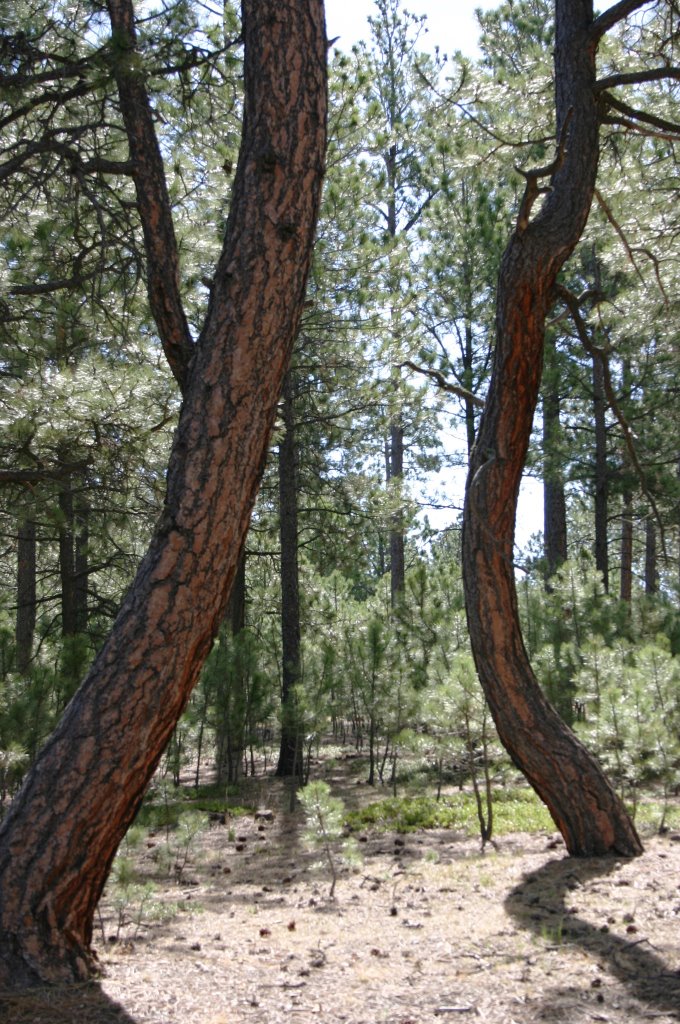
It's no Pikes Peak, but the terrain at Black Forest Section 16 trail offers a picturesque walk through a thick ponderosa forest. Check out these pics from the trail, and then check out the trail in today's Out There section of The Gazette.

Thursday, June 22, 2006

Update from Denali

Last month, a trio of Colorado College students headed to Denali, the highest mountain in North America. Their goal was to reach the summit of the 20,320-foot peak. Their expedition name: Breasts on the West Buttress, chosen to emphasize the cause they wanted to promote - breast cancer awareness.

Libby Bushell, Nancy Calhoun and Sheldon Kerr started off strong, but as Libby wrote today in this e-mail, encountered problems with the weather a couple of weeks into their climb.
Here's Libby's e-mail:

"So there we were at 14-camp (14,200 feet). It was our fifth day there, so we were still stoked on the scene. Picture 60 tents, 200 unwashed men, one yurt with rangers (ranga-boys) and lots of snow with the headwall (2,000 ft. of 50-degree snow/ice) on one side and the edge of the world (7,000 ft vertical drop to base camp) on the other. Whiffleball naturally sounded like a good idea, Fabio having brought a ball and a bat (no joke, our best friend's name was Fabio). So, we get all the men in camp to play in a diamond the area of a large dorm room. Most of them don't understand baseball or can't speak English. We're all wearing slippery overboots over down booties and falling every three feet into the slushy postholes we've created throughout the game which isn't so bad because the 10-ft run to first base is enough to make you winded enough to merit a sit.

SO Hiraldo, the Puerto Rican gets up to bat, takes a crack and sprints to first where he slides in and starts yelling. We find out later he's pulled his hamstring, no no, torn his hamstring and can no longer walk. So he's supposed to get choppered out of there but the weather remains bad for 7 more days, during which he's crutching around camp and everyone (since we're all weathered in for 12-plus days) starts calling him Hammie just straight to his face. "Hey Hammie, how's it going?" "Oh, you know, just waiting for the weather." "Yeah, me too...."

So, we finally got up to high camp. We came cruising in like victorious superheroes, except add 70 lb packs, a bedraggled look, no oxygen, and a general hatred for life. We got in at 10 p.m. to find all the campsites full, which means that we have to build walls until 2 a.m. (which actually means that Libby weenies out and crawls in the tent at 12:30 a.m. and Nancy and Sheldon heroically build walls until 2 a.m. Then it takes 2 more hours to make 6 liters of water... I hate high camp. I don't wish it on any of you. Summit day was two days later. We started out in beautiful weather, a little wind. We made it up to 19,400 ft when we noticed a lenticular cloud over the summit at 3:56 p.m. We're 3 hours from the summit and are all a little weary but stoked. We ate a bite of candy bar (which was pretty much all the substance we consumed for five days) and at 4:07 we're in a whiteout with 50 mph winds trying to kill us.
Retreat!
So we head down, can't see or hear each other in the storm so when Sheldon has vertigo and stops to puke on the trail, Nancy and Libby are jerking on her, wondering if maybe the rope is caught on a rock and are pulling her down a slippery slope to her doom, self-arresting in her own vomit (graphic details made up by Libby). In a whiteout that bad you can't tell up from down and Sheldon was sure she was going to die while Libby was navigating from pee hole to pee hole, trying to get back down to the friendly atmosphere of high camp. We make it back to camp and the weather gets good again, so we're able to look at the summit and shake our fists at its thwarting of us, but are happy to be alive and going home.

We were 22 days on the mountain, 12 of those at 14-camp. We made some good friends, had some good times, and didn't ever get in a fight, although Sheldon called Nancy and I (names) after we dragged her down the slippery slope of doom amidst her vomit. We were the youngest ones up there and also the only all-girls team, so we were quite popular. The hardest day was the very last, which started at 7 p.m. at 14-camp and finished at 7:30 a.m. at base camp, through a foggy whiteout on the lower glacier whose crevasses had opened up enough to make even me scared as we're making S-turns throughout them, paralleling one so as to avoid another, and getting our sled caught in and then disappear into the darkness.

And then we were in Talkeetna, partying at the pub with our Irish friends, and now we've gone our separate ways, Sheldon in Skagway, Nancy in North Carolina and Libby in Homer. It's been great. Thanks for all the support, kind thoughts and friendship you all have given us. This is Libby signing off.

Sneak peak... Showing you the love

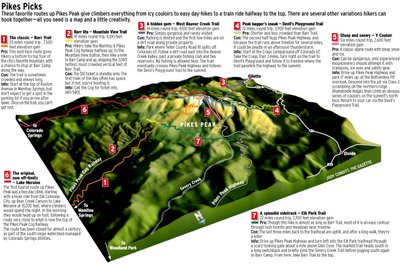
Because we love our online users, here's a sneak peak at tomorrow's Out There, or at least part of it.
We'll be giving you alternate routes up Pikes Peak that will get you away from the Barr Trail Crowd.
Here's the map we'll be putting in Friday. You can see it and read the story at gazette.com (click on Out There).

View from above


Happy trails...from space. Check out this Google Earth image of the Section 16 trail in Black Forest, profiled in the June 23 Out There section of The Gazette.

Ski areas flip on roadless areas

Image from timeinc.com
The White River National Forest held a public meeting for people to voice their support of roadless areas in the public land Wednesday in Glenwood Springs. According to the Aspen Times the 250 people attending the Roadless Areas Review Task Force meeting to testify against gas drilling in these areas included outfitters, local mayors, hunters and conservation groups.

The cabal included a spokesman from Colorado Ski Country USA, the trade association for the state's ski industry. The organization supports protection for the state's roadless areas - as long as that doesn't directly affect the ski industry.

It wants the roadless designation eliminated when it falls within established ski area permit boundaries in the White River National Forest, according to spokesman Alan Henceroth.

Wednesday, June 21, 2006

It's all about the shoes

It happens. One of the three men on the Arctic 1000, a 600-mile unsupported trek across the northwest corner of Alaska's remote Brooks Range, has had to be rescued. Ryan Jordan, publisher of Backpacking Light magazine, was injured when he broke through the edge of an ice shelf on a creek and hit a rock. Four days later, he realized he couldn't continue walking on with Jason Geck and Roman Dial.

The group reported the injury on its Web site, and unleashed a storm of criticism about, what else, proper footwear. These three adventurers are hiking light, and all are wearing trail running shoes instead of hiking boots. That backpacking philosophy is a popular one, but also one that inflames purists, those of the Norwegian-welt leather boot and 60-pound pack mentality.

Supporters of the three men say Jordan might have gotten hurt even if he was wearing heavy boots, but others are sure it is his quest to go light that was his downfall.

Dead men don't float

Two California men have been charged in federal court with using the identities of dead or fictitious people to get permits to raft the Grand Canyon.

Stephen E. Savage, 61, of Diamond Bar, Calif., was in federal court in Flagstaff, Ariz., Tuesday, according to the AP. He was held on 11 counts of fraudulently obtaining rafting permits. He was arrested Sunday by National Park Service agents at Lee’s Ferry, where many people start their rafting trips.

Timothy J. O’Shaughnessy, 45, of Whitewater, Calif., was arrested in California on Monday and turned over to the U.S. Marshals Service on the same charges, all misdemeanors.

Officials said an anonymous tip lead them to the men after someone heard one of the men bragging about his deeds. In one example, he used the permit given to a man who had died while waiting for it to be granted. More than 7,000 people are on the waiting list to raft through the canyon.

Your fourteener checklist, now online


Colorado has everything from passport books to water bottles to T-shirts that display a checklist of the state's 54 fourteeners. Now a computer science teacher at Florida Tech has made a free online site where climbers can update their checklist and post it for everyone to see. To check it out, click here.

So far, almost 300 people have posted their lists, including a few names I recognize from Colorado Springs.

The site is in no way official. It isn't password protected, so anyone can alter a list, but it is a nice way to keep track, and considerably easier and cheaper than the traditional way -- climbing to the top of each peak and signing the register. On the other hand, it's also easier to fake.
But for those of us just trying to keep track, it's a fun site to visit.
BTW, I have five fourteeners to go, not counting privately-owned Culebra Peak. I hope to finish this summer.

Tuesday, June 20, 2006

Mud pit? Go Karts? Sign us up!


Copper Mountain holds its annual Copper Chase family-oriented adventure race June 30.

Those in charge won't say what exactly the two-day race entails - the fun is in not knowing - but they do say:
"We can let you know there will be: Water Elements, Obstacle Course, Mountain Biking (only downhill not single track), High Ropes, Mental Challenges, Climbing Components, Mud Pits, Go Kart Racing, 5K Run and many other physical, mental and adrenaline rushing challenges!"

Cost is $100 for a team of two. Heck, I could blow that at the Go Kart track down here.

To find out more about signing up, click here.

A look at our new county park!


The Gazette reported today that deceased Fountain rancher Alexander Kane left 440 acres to El Paso County to become a park. We haven't gotten a map of the property yet, but here's a view of his spread via Google Earth.

This is one of the old, traditional ranches irrigated by the Fountain Ditch. To learn the history of the ditch and how it shaped the region, click here.

These irrigated ranch lands are almost completely gone. The water has been usurped by development. But it's nice to have a small piece left. I hope it comes with water rights. What a nice edition to the park-deprived southeast side of the city.

Monday, June 19, 2006

Focus on conservation

From the Associated Press:

In a blow to snowmobilers and all-terrain vehicle enthusiasts, the Interior Department issued new guidelines today that emphasize preserving natural resources over developing more recreation opportunities at national parks.

The guidelines reverse a controversial proposal last year that put more priority on attracting vacationers and recreation users beyond nature enthusiasts.

Conservation “is the heart of these policies and the lifeblood of our nation’s commitment to care for these special places and provide for their enjoyment,” Interior Secretary Dirk Kempthorne said in announcing the new draft guidelines.

The new parks policy will become final in about three weeks, officials said. It is one of Kempthorne’s first moves after resigning as Idaho’s governor to take over the Interior Department less than a month ago.

The new draft emphasizes that when deciding whether to allow cell towers, ATVs, Jet Skis or other motorized vehicles, a park supervisor must consider whether any new use would damage not only the air, water, land and wildlife but also “the atmosphere of peace and tranquility and natural soundscapes” in parks.

It specifies that lands eligible for wilderness designation should be free from snowmobiles, ATVs and other motorized vehicles.

Read the full report here.

Crazy, adventurous life


Friends from as far as England gathered Sunday to share memories of Sue Nott, who was last seen in mid-May with climbing partner Karen McNeill attempting to climb Alaska’s Mount Foraker.

Nearly 1,000 people attended the memorial service at Ford Amphitheater in Vail.

As Karen Nott began reading a poem for her sister, a gust of wind rolled through the amphitheater over a large smiling picture of Sue Nott, The Vail Daily reported.

A startled Karen Nott looked up from the podium. “Hi, Sue,” she said, her voice shaking.

Nott, 36, and McNeill, 37, were last seen on May 14 at the base of the Infinite Spur route. Rescuers searched for days when they failed to return to base camp.

Friend John Varco said he hoped people would remember Nott in overcoming their own troubles. “Hopefully when the little things begin to bother you, you won’t sweat them.”

“Wow, what an outstanding life this woman lived,” pastor Tommy Schneider said. “What a crazy adventurous life she lived. She took this life she had and threw it in the pond, and it had ripples, huge ripples.”

(Above, friend Zoe Hart stands in front of a large photo of Sue Nott at the services. /Preston Utley of The Vail Daily)

Want to race the Primal Quest? Take a hoof pick

He're the mandatory packing list for the 500-mile adventure race that starts in Utah next week. It's as insane and grueling as the race.

* 1 Windproof Lighter
* 1 Knife, within easy reach, folding OK (minimum blade of 2.5" / 6.4cm)
* 1 Whistle (must work when wet)
* 1 Headlamp with extra batteries
* 1 Brimmed or caped cap for sun protection
* 1 Space blanket
* Water purification tablets or liquid, filter or other
* 10 WAG bags for carrying out human waste (provided by PQ)
* 1 Means for carrying adequate supplies of fluid (100oz / 3 liters minimum bladder)
* Money for emergencies
* Photo identification card
* Reflective tape 1" x 2" (2.5cm x 5cm) for helmet and 1" x 6" (2.5cm x 15.2cm) for backpack, minimum

Mandatory Safety Equipment (Per Team)
* 2 Compasses (one for every 2 racers)
* 1 Emergency strobe light (not a bike light) - must emit a bright white light visible for at least 3 miles
* Dry bags for safe-keeping of your GPS/sat phone and other items that must be kept dry (must be waterproof)
* 1 GPS Tracking Device w/Emergency Sat Phone (Provided by PQ)
* Maps (Provided by PQ)
* Waterproof map case
* Altimeter
* Backup team headlamp

Medical Kit (Per Team)
* 10 doses of pain/fever medication (Ibuprofen/Tylenol)
* 1 SPF 30+ sun screen, 3oz minimum
* 1 1oz Cortizone cream
* 1 Lip balm
* 10 Betadine, iodine or alcohol swabs
* 1 First aid tweezers
* 1 Needle
* 4 Moleskin 3 1/2" x 3 1/2" (8.9cm x 8.9cm)
* 1 24" x 1" adhesive tape (61cm x 2.5cm)
* 1 5' x 2" wide roll gauze roll (12.7cm x 5.1cm)
* 6 butterfly bandages
* 20 Electrolyte/10 Glucose replacement tablets
* 2 3" ACE bandages (7.6cm)
* 4 4" x 4" gauze pads (10.2cm x 10.2cm)
* 1 5 yards duct tape (457.2cm)
* 1 Antibiotic cream (i.e. Neosporin)
* 1 Pair of latex exam gloves
* 6 Antidiarrheal (i.e. Immodium)
* 4 Safety pins
Please note: EPI Pens are strongly recommended for individuals with allergies to insect stings, etc.

Gear Boxes (Per Team) - to be transported by race organization during the rac

* 4 Per Team - must be water resistant, stackable, lockable with volume capaity of 48 gallons or 181.7 Liters (maximum of 4 allowed)
Mountan Bike Equipment (Per Person)
* 1 Hard Shell Bike Box Container (suggested Tri All 3 Sports Velo Safe Pro Series Original)
* 1 Mountain bike
* 1 ANSI/Snell or CPSC-approved bike helmet (no climbing or hybrid helmets)
* 1 White light mounted to bike helmet
* 1 Front light (white light mounted to handlebars with extra batteries with minimum life of 30 hours
* 1 Rear light (red blinking light for rear with extra batteries with minimum life of 30 hours)

Mountain Bike Equipment (Per Team)

* 1 Bike tire repair kit (must include the following: 2 spare tubes, Bike multi-tool w/chain break, Set of tire irons, 1 Derailleur cable and 1 Brake cable (that would fit all team members' bikes), Patch kit, Tire pump or other inflation device (CO2 cartridges), Chain lube, Spare chain links
* 1 Bike assembly tools (tools necessary to build up or break down bikes for transport in bike cases

Horse Section Equipment (Per Team)
* 1 Hoof pick
* 1 Rigging lines/straps for securing gear to saddle
* 1 ATSM/SEI certified horse helmet(s) to fit all team members that will be riding (only one helmet is required IF it can fit all riders)

Fixed Rope Equipment (Per Person)
* 1 Commercial and UIAA-approved site harness, non-modified (ski touring harnesses not permitted)
* 1 Climbing helmet, UIAA-approved (bike and/or hybrid helmets not allowed)
* 2 Lanyards 24-48" (60-120cm) - Nylon daisy chain or runners (no spectra)
* 2 Lanyards 24-36" (60-190cm) - Nylon daisy chain or runners (no spectra)
* 1 Full size figure 8 device
* 4 Auto-locking carabiners - (UIAA approved) - 2 of the 4 must be "HMS" style
* 3 Commercially sewn climbing sling, 60cm long when laid flat (120cm long if cut)
* 2 6 or 7 mm Prussic loop(s)
* 2 Mechanical handled ascenders (no tiblocs or Wild Country ropeman) - Petzl Croll only allowed as long as you have minimum 2 mechanical handled ascenders in addition to the Croll
* 1 Pair of leather palmed rappelling gloves (no bike gloves)
* 2 Etrier(s) or foot stirrups to be attached to your ascenders

Mounting Section Equipment (Per Person)
* 1 Alpine ice axe of appropriate length for your height (50-80cm in length)
* 1 Pair of crampons and appropriate footwear
* 1 Climbing helmet (to an approved national or international standard - no bike or hybrid helmets)
* 1 Lightweight long pants and long-sleeved shirt
* 1 Shell gear clothing for upper and lower body (wind/water resistant)
* 1 Sleeping bag (rated 50 degree or lower) - Down bags must have a waterproof cover
* 1 Thermal undergarment top and bottom
* 1 Fleece top
* 1 Fleece hat
* 1 Pair lightweight to medium weight full-fingered gloves (biking gloves allowed) - waterproof recommended
* 1 Pair gaiter (not mandatory but highly recommended)


Mounting Section Equipment (Per Team)

* 1 Commercially manufactured 3-season tent to fit all members of a team (split tents must have both floor and top, must be free standing)
Paddling Equipment (Per Person)
* 1 Hard shell kayak paddle container (only one per team and must fit all 4 paddles. Suggest Tri All 3 Sports Paddlepack.
* 1 Paddle with reflective tape on blade and shaft
* 1 PFD with reflective tape on shoulders - Type III 151/2 lbs minimum buoyancy
* 1 Whistle attached to life jacket
* 1 Knife with scabbard sheath attached to life jacket, min. blade of 2.5" (6.4cm), folding OK
* 1 Helmet (bike or climbing helmet ok)


Paddling Equipment (Per Team)
* 1 7mm Prussic loop 18" (45.7cm) tied tip-to-tip
* 2 Locking carabiners
* 2 Commercial safety throw bags (1 per boat with 65' buoyant rope)
* 16 Commercial 12hr light sticks (8 per boat)
* Zip ties or other means to attach light sticks to kayaks and competitors
* 2 Airhorn minimum 1.4oz
* 2 Bilge pump (no sponges or bail cups)
* 2 Dry bags or more for team gear in hatches, size adequate for gear carried


Swim Equipment (Per Person
* Mesh bag for all gear excluding swim board, will be taken on swim (more than 1 bag allowed, not to exceed 4)
* 1 Wet suit - full 3 mm wet suit OR 3mm Farmer John and a dry top combo
* 1 Pair swim fins
* 1 Helmet, climbing helmet OK (no bike helmet)
* 1 Pair neoprene gloves
* 1 Boogie board, non-modified and not to exceed 4' in length
* Means for carrying adequate supplies of fluid (2 liters min. bladder)
* 1 Whistle attached to life jacket
* 1 Waterproof bag for gear

Ultra-Rob update

According to a daily diary on the Race Across America Web site, Springs cyclist Rob Lucas has fallen behind the 10.48 mph minimum average speed for an official finish. Lucas is also noted for logging the least credited sleep hours - 31 - in the eight days of the race.
No word from Rob, but it appears he is still riding, having covered 1996.5 miles so far.

Scooter vs. deer

The deer are out in force right now - be watchful when you drive U.S. Highway 24, where they graze just off the pavement.

And they aren't just a hazard to drivers in their cars. This report came in from Warren Epstein, Arts & Entertainment editor at The Gazette:

"If you need another reason to keep an eye out for deer on the west side, here's one. I was riding my little 49cc scooter home Friday night on Manitou Avenue, just approaching the U.S. Highway 24 overpass, when a large doe ran across the street, her right front leg knocking my front tire. My scooter spun into a 180, and the deer ran off. Remarkably, I was unhurt, the deer looked fine, and there's no apparent damage to the scooter. Man, that could have been ugly."

The Weekend Bear is gone

The Crags is one of the most popular camping and hiking areas in the region. It's also in a part of the Pike National Forest known to be home to black bears. But there were few bear-human problems there - until recently.

Officials closed the campground and set up bear traps to catch a marauding bear, but it just moved along the creek. Reports are it attacked at least two people and then, over the weekend, bit a camper. Here's an account from a camper, posted to a local blog, http://nonprophet.typepad.com/nonprophet/

Here's the scoop from Michael Seraphin at the Colorado Division of Wildlife: The agency called this bear the "Weekend Bear," for his modus operandi - every Saturday for the past three weekends, the bear attacked a camper in a sleeping bag. The bear, it seems, had learned to associate food with tents and sleeping bags. The first attack was minor, and the DOW only heard about it unofficially. The second attack was reported by the victim, a man in a sleeping bag in the same campsite as the first one.

This past Saturday the campground was closed, but campers set up along the road that leads to the area. A boy was in his sleeping bag outside a tent (during daylight, according to the local camper noted above, Nonprophet) and the bear tugged at it. When the boy woke up, the bear swatted his head. Family members screamed and the bear ran to the campground and into a trap the DOW had set up at the animal's favorite campsite.

The boy was treated and is not seriously injured. The Weekend Bear was captured and killed.

First fourteener rescue of the summer

Photo from 14ers.com
A Westminster man climbing El Diente with his son was the first fourteener rescue to make the news this year.

El Diente is known for steep, loose rock, and is rarely climbed by anyone except the growing cabal of Coloradans trying to climb all the state's 14,000-foot peaks.

According to the Telluride Daily Planet, 51-year old Ronald Deffenbaugh was climbing the remote peak on Friday when he fell about 50 feet and broke his ankle. His son was able to get cell phone service and called search and rescue, which radioed for a helicopter.

No problem, right? Easy extraction.
Nope.

There were no large military helicopters available to winch him off the steep slope. The two helicopters that did respond were unable to reach the area because of high winds. So Deffenbaugh waited.

The temperature up so high quickly dropped to 35 degrees. Rescuers reached him a few hours later, but it took them 21 hours to carry him down the steep, loose slope to a spot where he could be air-lifted.

El Diente, and its neighbors, Mount Wilson and Wilson Peak, are fairly steep, challenging, dangerous peaks near Telluride. A search and rescue veteran quoted in the Daily Planet says his team has pulled about eight dead people off El Diente. I only find a report of one killed, in 2004, on neighboring Wilson Peak, but I'm sure he wasn't the first.

A few lessons we can take from this. Always plan for the worst on these big mountains. Even if you only twist an ankle, it could mean spending hours on cold and possibly stormy slopes. Bring more food, water and clothing than you think you'll need.

Also, something I noticed when climbing Little Bear Peak last week. Your cell phone may indicate that you have service, but not be able to connect a call when you need it. Take it along, but don't count on it to get you out of a bind.

Friday, June 16, 2006

Everybody's doing it


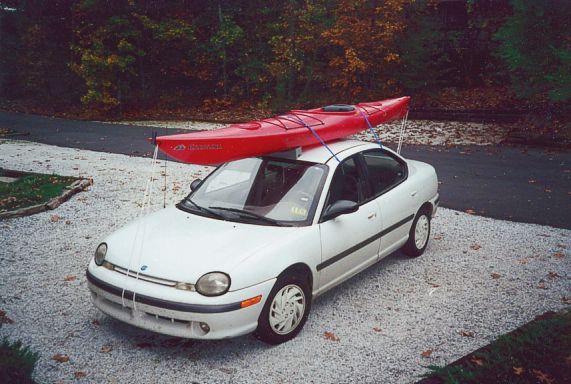
If you've started to think that a car topped with a kayak is the outdoor statement of the decade, you might be right.

The Outdoor Industry Foundation conducted a survey that showed that 12.6 million people got into a kayak at least once last year and about 2 million kayak regularly. In the foundation's first survey in 1998, 4.2 million had kayaked, and only 400,000 did it regularly.

Do you fit the kayak demographic: Young (more than half are 34 or younger); male (although the number of female kayakers is increasing); affluent - nearly half make at least $80,000 a year - and a resident of the Northeast or West. (Thanks to Clemson for the photo.)

No rescue required


It's an "ooohhhhh" moment, when you see a tiny fawn following its mother through the forest or curled in the tall grass. It's also the right moment to remind yourself to leave the little ones alone. This is birthing time in the wild, and that means the Colorado Division of Wildlife has to remind people to not approach, touch or handle young animals. Most of the time, babies seen alone haven't been abandoned. Deer, especially, will leave their young to feed, to hide from predators and to learn to live in the wild. If you hike with your dog, keep it under control so it doesn't flush out any young.
For more information, go to http://wildlife.state.co.us

Ultra-Rob forges on


Where's Ultra-Rob? The cross-country bike racer from Colorado Springs is holding his own in the Race Across America. Today, he's in sixth place, with 1,345.6 miles behind him. He's almost halfway, and although reports are that an IT band on his left knee was bothering him, he hasn't taken any painkillers.

Ultra-Rob is riding in the Enduro category of the race; last night, one of his competitors (the guy who was leading) was blown off a Kansas highway and suffered road rash and minor injuries.

Fibark ducky races

When the folks at Fibark -- that's "First In Boating on the Arkansas" to you (it's the state's biggest river festival) -- asked The Gazette to send a representative for the annual media ducky race (a ducky is an inflatable kayak, not a yellow bath toy), they naturally chose me: the TV writer.

OK, so I've been known to kayak on the weekends. And, after seeing outdoor writer Dave Philipps' ducky prowess on the Green River two weeks ago (he flipped and swam the aptly named Disaster Falls -- see Friday's Out There section), I can see why he was out. So, I took a break from slaving away over a hot DVD player and trundled up to Salida yesterday.

My first stop was the Pine Creek rapid above Buena Vista, where the extreme boatercross race is held. Pine Creek is a narrow, fast Class V (very, very tough) rapid, with a nasty keeper hole at the bottom. Last year, several professional kayakers said they got the worst beat-downs of their lives in that hole. In a boatercross, kayakers launch in a mass start and bounce and bash each other on their way down the rapid, so you can imagine the carnage potential. Reportedly, this year's race wasn't as ugly as last year's, although there was still plenty of carnage (people getting stuck in the aforementioned hole and lots of flipping -- not literal carnage. Much.).

The media ducky race is just like that. Except no Class V killer hole and no pro boaters. And let me preface the results by saying: I was robbed. Totally.

Those conniving schemers from KHEN (the Salida public radio station) ganged up on me. I aced my first heat (by comparison, Salida Mountain Mail reporter Jason Starr swam and his boat and paddle were recovered only after a lengthy downstream chase). So the hens knew what they were up against.

In the finals, I fell behind early, but recovered and made the gate while the other paddlers were still struggling in the eddy. KHEN's Jim Swett, a former raft guide (everyone in Salida is a current or former raft guide), gave up on the gate and paddled downstream to wait for me. He grabbed onto my ducky for dear life while his KHEN compatriot Dave Bokel caught up and cruised to victory. I should note that holding is perfectly legal in duckycross. Sadly, whacking Jim's fingers with my paddle would not have been. The world is unfair.

And, even with a hen on my bow, I did manage to pull out a second-place finish. Colorado Springs, represent! Or something.
Andy Wineke

Talk about lift lines


We've talked about the banner year for Colorado resorts and now numbers show it: State resorts set a record this season with 12.53 million skier visits, beating the previous high set almost a decade ago.

Great snow - remember those midwinter dumps? - and factors like the economy, strong
international traffic, favorable exchange rates and disappointing conditions at Canadian ski areas are credited for the numbers. (One of every 12 visitors was from another country, resort operators said.)

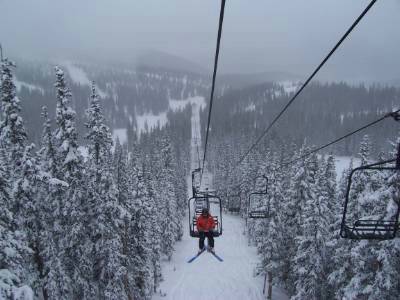
While the high numbers are great for the economy, they can be frustrating when you're waiting to ride. Bookmark or print out these tips and put them with your ski gear if you want to avoid the crowds next season. They'll help ensure you have a ride like this skier, headed up the hill at Monarch (photo courtesy Monarch Mountain).

Thursday, June 15, 2006

More cross-country riders

I was out on the eastern plains this week, on a stretch of U.S. Highway 287 that appears to be as popular among long-distance cyclists as it is among long-haul truckers.
I know, it's a strange mix, but they seem to make it work.

At Eads, a tiny town that is used to cyclists showing up, I met Tim Berthiaume, a 59-year-old retired firefighter from Clinton Township, Mich. Berthiaume is riding his recumbent bike solo and unsupported from Astoria, Ore., to Yorktown, Va. He started May 1 in Oregon, and was in Eads (almost to Kansas) on June 13.

Berthiaume is a little road-weary, and couldn't remember where he entered Colorado on his trip. But he did remember the long haul over Hoosier Pass. He's carrying 30 pounds of gear in a little trailer, and raising money along the way for the Great Lakes Burn Camp.

Lean and tanned, he says he has learned a lot on his journey. "Next trip across the country, I'm taking an RV."

Ultra Rob rolls through Colorado in 4th


Colorado Springs resident Rob Lucas, who we profiled last Friday just before he started the Race Across America, passed through Trinidad, Colorado at 8:30 this morning, three days, 20 hours, and 14 minutes after starting in California.

His average speed of 11.95 miles per hour has put him in fourth place. What a feat!

Track his progress at www.raceacrossamerica.org/.
Or check out his blog http://www.ultrarob.com/

600 miles, no resupply


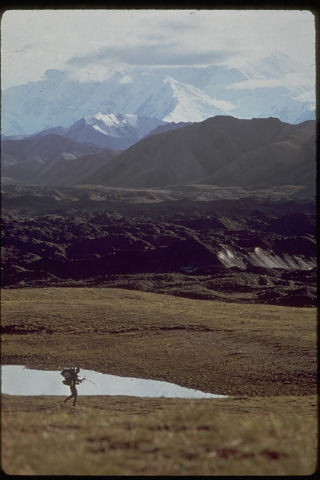
On June 11, three Montana adventurers, Roman Dial, Ryan Jordan and Jason Geck started walking in quest of the longest unsupported trek of America’s most remote, roadless, uninhabited wilderness, a distance of 1,000 km (600 mi).

Right now they're walking through the Brooks Range in Alaska.

They hope to finish the trip in 20 days. No hunting or fishing to bolster their diets. What they eat, they carry.

To put this in perspective, the Colorado Trail is 483 miles. Most people take six weeks to finish and resupply at least a half-dozen times.

What these guys are up to is pushing the very edge of what's possible. To find out more, and follow their daily updates, click here.

Where you smell smoke...


There must be fire.
Colorado Springs was greeted by smokey air this moring, but according to the early online edition of The Gazette, it's just the Tyndall Fire 75 miles to the southwest.
Seriously though, the fire danger is extreme, and if we don't want the forest to be closed like it was in 2002, we all need to be very careful. Today's high winds and dry conditions are perfect for whipping up another Hayman fire.

Wednesday, June 14, 2006

Pike National Forest not closing

Photo courtesy the Forest Service

I've now heard several rumors that the Pike National Forest is going to close, or the Barr Trail is going to close because fire danger was is so high. I checked them out, and according to Frank Landis at the Forest Service, there are no plans to close the forest.

The forest was last closed in 2002 when the Hayman fire started. Before such a closure happens again, Landis said, the Forest Service will first ban campfires in its camping and picnic grounds. Right now there is no such ban.

Fire danger, though, is EXTREMELY high. We don't recommend anyone have a fire or barbecue anywhere near the forest. Another Hayman is not out of the question right now.

Memorial planned for climbers

Relatives of Sue Nott, 36, of Vail, who vanished on Alaska's Mount Foraker last month with climbing partner Karen McNeill, 37, of Canada, plan to celebrate her life during a memorial service at 1 p.m. Sunday at the Gerald R. Ford Amphitheater in Vail.

Family members said the public is welcome to attend.

The Vail Daily News, reporting the family's plans, said the family had nothing but praise for search crews, who had been looking for the women for more than a week.

“Their professionalism, thoroughness and compassion have been exemplary and the family is very grateful for all of their efforts on Sue and Karen’s behalf,” the Nott family said in a statement released Monday.

Search crews are looking for the women's bodies after determining the two likely ran out of the fuel they needed to melt snow into water many days ago, said Kris Fister, a spokeswoman for the Denali National Park and Preserve. They also would likely have been without food for more than a week.

Fibark starts tomorrow!!!


Salida, which is already in the running for "coolest town in Colorado," kicks off its even more cool FIBArk festival on Thursday.

FIBArk stands for "First in Boat down the Arkansas River."

It used to just be an annual river rat race. Whoever made it first, won. For the full history, click here.
Now it's turned into a four-day event that is the top party of the year for this mountain town. It's also probably one of the best fests for visitors. This isn't just a collection of vendors and a bad band. There is awesome stuff to see and it's all free. Thursday check out the Boater X, a mass-start race down Pine Creek, the hardest rapid on the river, that makes a demolition derby look as tame as a curling lesson.

Then there's the USA Wildwater Championship on Friday, followed by a cruiser bike parade and race.
Saturday brings the Hooligan race, where locals compete on homemade floats made of inner tubes and who knows what else. Sunday brings the big FIBArk races.

And of course, every night there is food, drink and live music. Plus, hey, you're in Salida, so if you're bored with the events, go mountain biking, or climb a peak, or hit the rapids. There's tons to do!

Tuesday, June 13, 2006

Salazar says go easy on Roan Plateau


The fight over what to do with western Colorado's Roan Plateau, which is rich in roadless wilderness and natural gas stores, is far from over. High-ranking politicos are urging compromise.
The AP reported this today:

"the public should have an opportunity to comment on the final plan for management of the Roan Plateau near Rifle.
In a letter to Interior Secretary Dirk Kempthorne, (Sen. Ken) Salazar, D-Colo., said the public never had a chance to weigh in on a natural gas drilling proposal expected to be included in the plan.
The Bureau of Land Management, part of the federal Department of the Interior, is hoping to release the final Resource Management Plan Amendment by late August. "

Salazar suggests delaying the release by 60 days to allow for public input on the final plan before its adoption. He favors a compromise plan that would allow drilling, but limit the number of roads and drill pads.

The high plateau is a rarely visited realm of aspen glens and hidden waterfalls. For anyone who might want to get a look before various energy companies light the place up like a birthday candle, use the trail descriptions HERE from my visit last summer. Now is the perfect time to visit, as the waterfalls will all be going full force.

Monday, June 12, 2006

Park your impatience

Call it wishful thinking. You want to hike the trails at Cheyenne Mountain State Park even though it's not open to the public yet. And you heard that park staff actually wants you to hike there, unofficially welcoming you there to keep the trails from growing over.
It's not true. The park isn't ready. It's closed to everyone except those who have been granted permission to be there from the State Parks department.
It's still slated to open in the fall, with 18 miles of trails over 1,680 acres.
If you just can't wait to experience the park (that will be the first and only state park in El Paso County), head on down Highway 115 to Aiken Canyon. It's located in the same life zone, so it shares many characteristics with the new state park.

Turtles beat out jet skis

We know that there are a lot of jet-ski fans out there. There are also a lot of people who prefer their waters calm and quiet.
For that contingent, Bluewater Network, a division of the environmental group Friends of the Earth, has released a list of the 10 best places to avoid jet skis in 2006.
The group is campaigning against jet ski use on waterways that are used for fishing, canoeing, swimming and wildlife viewing.
The 10 best jet-ski-free places:
1. Padre Island National Seashore in Texas (pictured)
2. Delaware Gap National Recreation Area in Pennsylvania and New Jersey
3. San Juan Islands in Washington
4. Biscayne National Park in Florida
5. San Francisco Bay Area in California
6. Kachemak Bay in Alaska
7. Upper Missouri Breaks National Monument in Montana
8. Cape Hatteras National Seashore in North Carolina
9. Lake Willoughby in Vermont
10. Indiana Dunes National Lakeshore in Indiana

14er update, the latest on the Sangres

Over the weekend I hit the Sangre de Cristo mountains to climb Little Bear Peak. Normally, this time of year, there can still be a fair amount of snow in the high country, especially in shaded couloirs like the ones that lead up to the summit of Little Bear. But this is not a normal year. The Sangres had almost no snow this winter, and a warm spring has dried it all up.
When we headed up Little Bear Saturday, we only saw one patch of snow, about the size of a city bus, near the top. Not that it was smooth sailing. In the crux couloir near the top of the mountain, which many climbers call "the bowling alley" because its shape tends to funnel rock fall down into a narrow corridor where it has K.O.'d more than one climber, we found ice instead of snow.
Little trickles running down the rocks had frozen during the night and made the bowling alley as slick as a skating rink. My partner and I had to swing out onto some exposed V Class rock to avoid it. It was one of those climbs where at some point, just for a moment, you realize you could really hurt yourself, so you better not screw up. I was particularly thinking this because my buddy is about to get married and if I brought him back mangled, or worse, I'd probably get in trouble.
But of course everything was fine. We reached the top and had it all to ourselves. The view was sublime. On the way down, we scrambled down the ice using an old rope left in the couloir, which was a little scary, but better than any alternative we could think of.
All the the Sangres are now snow-free. We drove past the Collegiate Peaks on our way back, and they still have quite a bit of snow. The season is in full swing. Climb away. Bring your gaiters and watch for lightning.
I have five more fourteeners to climb and I hope to finish them all this summer.

Everest on TV

American Dan Mazur, whose team stopped to assist Australian Lincoln Hall on Mount Everest a few weeks ago, saving Hall's life, will be interviewed on "The Today Show" this morning. Mazur has said he and team members couldn't imagine leaving hall, who was sitting up and talking, but in obvious distress, even though it meant giving up their own summit bid.

"The Today Show" in on NBC (Adelphia channel 5)

Sunday, June 11, 2006

A climber's climber

That's how Outside Magazine described Sue Nott of Vail in a profile about three years ago. Nott and climbing partner Karen McNeill are still missing today on Mount Foraker in Alaska. Friends and family members are said to be making their way to Denali National Park and Preserve to be near the area where the women disappeared and, they hope, soon will be found.

Although it is believed the women would have been out of food for at least a week, fellow alpinists say if anyone can survive the conditions on Mount Foraker without basic supplies, it is Nott and McNeill.

Read the latest comments from friends and fellow climbers who saw the women just before they set out on their attempt to be the first women's team to successfully summit on the Infinite Spur route at Canada New / Calgary Herald: www.canada.com/topics/news/national/story.html?id=a05bc866-06de-4327-94a5-e1bfe7f07b68&k=84670&p=1

Friday, June 09, 2006

No Picassos


Far from it, it seems.

The Associated Press reports spray-painting vandals damaged ancient Indian rock art at McInnis Canyons National Conservation Area. Officials said saving the images could be difficult.

Blue, white and black graffiti was discovered last weekend and was done between May 30 and June 4, the Bureau of Land Management said. The BLM administers the area, about 10 miles west of Grand Junction on the Utah border.

Desert sandstone quickly absorbs paint, making it difficult to remove.

“I guess there are products that are recommended that should be able to remove most of the paint, but not all of it,” BLM spokesman Mel Lloyd said.

Acting McInnis Canyons manager Gene Arnesen said the vandalism was offensive and costly.

“Using rock art panels for senseless graffiti not only offends Native Americans and robs the American public of cultural treasures, but it also creates an unnecessary cost to taxpayers for removing the paint.”

(The BLM photo shows Pollock Bench/Rattlesnake Canyon in the conservation area)

Still no sign of hikers

The latest wire reports indicate clouds kept crews from hitting the skies another day in the search for two hikers, including a Vail woman, missing on Mount Foraker in Denali National Park and Preserve.

Kris Fister, a park spokeswoman, said the cloud ceiling was at 9,500 to 10,000. “It’s not looking real favorable today,” she said early in the day. There were no further reports conditions had changed.

Thursday, June 08, 2006

Check out today's Happy Trails


We used Google Earth to get a bird's eye view of today's trail. And it's a good one. Finally, there is an official link between Red Rock Canyon and the Intemann Trail, which means hikers can now easily go from Manitou all the way to Cheyenne Canyon on the trail. And actually, if you're feeling frisky, you can go from Manitou all the way to Penrose on trail. Pack a lunch.

Clouds hamper search

From the AP in Alaska:

Mount Foraker remained shrouded by clouds today, casting doubt on plans for a high-altitude search for missing climbers Sue Nott of Vail and Canadian Karen McNeill.

“Right now it’s socked in at the base camp,” said Kris Fister, spokeswoman for Denali National Park and Preserve.

The search is in its eighth day Thursday.

Nott and McNeill left their base camp May 12, and began their climb of the ascent route, the Infinite Spur, on May 14. The climbers had told people at base camp that they expected to complete the route in 10 to 14 days.

An air taxi operator and others familiar with the women’s plans flew the climbing route early last week.

The women, at the urging of people at base camp, carried a radio. The radio, a ripped backpack believed to be Nott’s, and a sleeping bag were spotted Friday in an avalanche debris field. A helicopter crew on Sunday spotted a yellow bag, black fleece hat and pink nylon jacket in the same area.

With each passing day the chances that the two women are alive is diminished, Fister said. It is believed the two have been without food and fuel for a week to 10 days, she said.

Fister said the agency’s search efforts would continue until the areas of highest probability were searched as thoroughly as possible.

The Matt Carpenter plan: save $15, lose $1,000

Matt kickin Eminem on the iPod during the Leadville100

OK, sure, Matt Carpenter did it on principle.
When he entered the national 10K trail running championships, which were held in Vail last weekend, he refused to pay $15 for short-term membership with USA Track & Field.

"You win your awards. You don't buy them," the 41-year-old Manitou Springs runner told The Denver Post.
Of course he won the race, finishing in 44 minutes, 5 seconds, 1:39 ahead of the runner-up.

But without a membership, he was ineligible to claim the $1,000 purse.

Oh well, he said.

"A principle is not a principle unless you are tested," he said. "If it costs me $15 to win $1,000, then that's against my principle."

Carpenter is undeniably a purist. He's been fighting fees and dues and other things that seem to cling to organized running for years. Recently, he ducked the fees associated with Active.com (which is the Ticketmaster of the running world) and set up his own online sign-up for the Barr Trail Mountain Race that saved runners several dollars.

By the way... just to start the buzz... Carpenter is signed up to run Pikes Peak August. I've been running with him a bit, and he keeps breaking his own records on training runs that he hasn't broken since 1993 when he set the record for the Pikes Peak Ascent. Does this mean he'll be able to break his record in the race? Time will tell.

Wednesday, June 07, 2006

Everest from afar


Jake Norton wasn't on Everest this spring. But this seasoned climber from Colorado watched from afar. And when reports surfaced of 40 people walking past a dying climber on their bids for the summit, Norton felt he had to write about it.

Norton has been on the mountain five times and has summited twice. Here's what he wrote in his newsletter:
"On the evening of May 14 and the morning of the 15th, David Sharp, a 34-year-old British climber, lay dying just below the First Step on the Northeast Ridge route. Reports indicate that roughly 40 people walked past him en route to and from the summit. No one stopped to lend the man a hand. No one was willing to sacrifice their summit, their dream, to help a fellow human being.

Perhaps there was no possibility of rescue. Perhaps David would have died regardless of assistance from other climbers. Either way, the actions on the mountain this spring beg the question: How much is the summit of Everest worth? Do mountainous goals legitimize the sacrifice of our humanity and compassion?

Having had the good fortune to stand on top of the world twice, I can say with certainty to anyone caught in a similar situation in the future: The summit is not worth the sacrifice of one's humanity. Yes, reaching the top is a wonderful experience. But, in the end, the summit is merely a small patch of snow sitting upon a big hunk of rock...and thus is not material for sacrificing humanity.

On the morning of May 7, 2001, my teammates John Race, Tap Richards and I had just begun our summit bids on what was my second expedition to the mountain. En route to Advanced Basecamp, we encountered Tibetan yak herders carrying two injured Chinese glaciologists down the mountain. Both men were suffering from advanced pulmonary and cerebral edema; if left unaided, they would soon die. Our decision was simple: We aborted our summit bid and began the arduous task of carrying two men down the Rongbuk Glacier. I blew out my knee in the rescue, ending my expedition with a resonant POP...but both Mr. Gao and Mr. Li lived to see their families again.

Three weeks later, my teammates were going for the summit via the NE Ridge. During the course of their summit bid, they ended up abandoning their summit hopes to rescue 5 people - 3 Siberians, one American, and one Guatemalan. The final rescue took place a mere 45 minutes from the top. Did they hesitate? Not a bit. Again, the tiny patch of snow lying at 29,035 feet is just that...a patch of snow. It will be there next year, and the year after that. And, in the end, standing on it does not change one's life. Reaching out to change the lives of others - no matter how short those lives may last - does.

In his famous book "Zen & The Art of Motorcycle Maintenance" Robert Pirsig writes: "To live only for some future goal is shallow. It's the sides of the mountain which sustain life, not the top. Here's where things grow." I would add to Pirsig's observations that it is on the sides of the mountain where we grow, not on the top. And, there are times when that growth comes from sacrificing our own goals, dreams, and ambitions to reach out and assist others.

We must have goals in our lives, and we must aim for those goals, go after them with everything that we have and everything that we are. But, the important part of our goals is not reaching the end mark, crossing the finish line, but rather the experiences on the sides of our mountains. And, again, sometimes we must let go of Machiavellian ambitions, sacrificing our ambition so that we don't sacrifice our humanity, echoing the words of Martin Luther King, Jr.: "There comes a time when one must take a position that is neither safe, not politic, nor popular, but one must take it because it is right."

Norton often writes about his climbing experiences and showcases his photographs on his Web site, www.mountainworldphoto.com
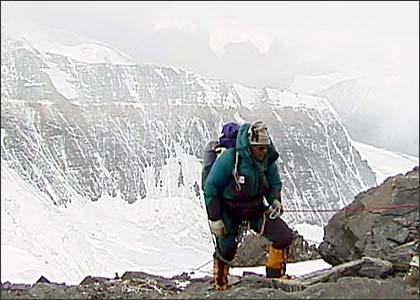
(In this photo, from the American Foundation for International Mountaineering, Exploration and Research, Jake climbs the north face of Everest).


Tuesday, June 06, 2006

Search for climbers continues

From the Associated Press, in Alaska:

A search for two climbers - Sue Nott, 36, of Vail and Karen McNeill, 37, of Canmore, Alberta - missing on Mount Foraker is focusing on the area near the 17,400-foot summit after rangers confirmed that tracks were spotted nearly 1,000 feet
from the top.

John Loomis, a mountaineering ranger, was aboard a search aircraft Monday and photographed footprints at the 16,400-foot level.

Searchers earlier spotted tracks at the 15,500-foot to 15,800-foot level, but they appeared to just end.

A high-altitude helicopter and a fixed-wing aircraft made several flights near the summit Monday. Three helicopters were expected to join the search today.

Weather remained favorable, with broken clouds at 11,000 to 12,000 feet and winds relatively calm.

Monday, June 05, 2006

Climbers missing

Two of the most respected women climbers are missing on Mount Foraker in Alaska. Sue Nott, 36, of Vail, and Karen McNeill, 37, of Canmore, Alberta, Canada, left for a climb on the notoriously difficult mountain May 14 and told people they expected to finish in 10 days. When they didn't return by Thursday night, a rescue team began searching. Foraker is a 17,400-foot peak in Denali National Park. This season, 30 people signed up to climb Foraker, but of the 26 who have returned, none made it to the summit.

In 2004, Nott and McNeill were the first women to reach the summit of Denali after climbing the Cassin Ridge. That climb is chronicled in an article on mountainzone.com.

Ultra-challenge for ultra-rider


Rob Lucas has logged thousands of miles on his bike, riding as many as 35 hours a week. It's a training regimen few can tolerate, but Lucas believes it will all be worth it next week, when he takes on the most difficult bike race in the country.

The Race Across America is just that - a nonstop transcontinental bike road race. Lucas is one of nine entrants from Colorado, and one of only two Colorado riders who will ride it solo. He's off to California now to prepare for the Sunday start, but he's still looking for support, especially in dollars. The race isn't cheap -- riders are responsible for their support crew for the nearly two weeks they will be on the road.

For more about Lucas and his challenge, check the Out There section Friday in The Gazette. To read more about Rob, check his blog, www.ultrarob.blogspot.com or his Web site at www.ultrarob.com.

The real issue of fourteeners is your tissue


The two most active threads on 14ers.com right now tend toward the scatalogical. It's not, "Is Mt. Wilson snow-free yet?" or "What's the best Route on Mt. Lindsey?" It's "What do I do if I have to go to the bathroom above treeline." And everyone's got an opinion: bury it, hold it, or (yuck) bag it. Others swear by the rhythm method -- "the best thing to do is time your 'time.' Take care of biz BEFORE you get there."

Only slightly more popular than talking about crap is talking about dog crap. Should you bring your dog? The consensus is yes, but bring a leash and a bag to pack out the poop. By the way, the Out There staff advocates this on local trails too, particularly Barr Trail, the Incline and Waldo Canyon, which all seem to have a dog doo-doo gantlet hikers have to run in the first 50 meters. Blechk!

Anyway, the third-top posting as of this morning was where the worst mountain speed traps are. I guess I shouldn't really be surprised the talk is not so much of the mountains. Mountaineers have always had trouble expressing their passion. See Everest pioneer George Mallory's "because it was there" speech.

Friday, June 02, 2006

Not so delicate


What happened on Delicate Arch, a landmark in Arches National Park in Utah? On May 7, noted climber Dean Potter climbed the aptly named landmark and touched off a major controversy. (You may have read about the hubbub here on this blog.)

On the Outside magazine Web site, author Tim Neville examines Potter's climb and whether it was quite as delicate as the climber claims.

The ethics of climbing are a worthy subject. In his book "Rock Climbing Colorado," Colorado Springs climber and noted climbing guide author Stewart Green writes: "As John Sherman so aptly points out... 'Topping out on a climb means nothing. How you get to the top means everything.' These statements lie at the heart of the ethical debate. Climbers have long promoted their individual and area ethics. But we need to agree to disagree only to the point where the rock itself does not become an unwilling and innocent victim to our own callous egos."

Check out the Outside article and let us know where you stand. Did Potter overstep his ethical boundary?

Summer ends fourteener skiing


Extreme skier Chris Davenport called it quits for the season after skiing Mount Holy Cross, his 45th fourteener this year. He has nine more if he wants to accomplish his goal of skiing all the state's highest peaks in one year, but, he said, there isn't enough snow.

In fact, he didn't find as much as he thought he would on Holy Cross. From his blog:

I knew it had a decent snowpack from this winter, but I’m glad I didn’t wait any longer to ski this classic mountain by its ultra classic route, the Cross Couloir. Normally, people can ski the couloir well into summer, but this year the window of opportunity will be very short, as Mother Nature continues to bake the Colorado Mountains to a crisp....

How do you know when it's a big water year? Count the bodies

Adam Barron on St. Vrain River
Much of Colorado had a formidable snowpack this year which made for awesome whitewater in the spring. Many creeks that don't run very often were full and attracted the state's most ferverent whitewater kayakers.
As might be expected, these creeks have "holes" that grab boats and hold them, and this weekend, two kayakers died.

One of them, Adam Barron, who disappeared in Vallecito Creek near Durango on Saturday and still hasn't been found, was a friend of mine in college. He was a gifted ski racer and road biker, and one of the kindest men I've ever met -- always up for a new adventure, and never complaining when things didn't turn out so well.
I got a call saying he was dead on Sunday from another friend in Boulder. Ironically, I had just finished a big whitewater trip myself, through The Gates of Lodore on the Green River. It put me in a good position to think about what had happened to Adam.
The things that made him such a likeable guy -- his taste for adventure, his skill, his good humor -- were ultimately the things that put him in the situation where he died. It's a great paradox of people chasing faster and faster after the ultimate outdoor thrill: There is an imperceptible line between cheating death and meeting it. We're never looking for it, and yet some people find it, on a sunny, perfect afternoon when they're not expecting it.
In no way can we condemn guys like Adam for living the way they do. I think it's inspiring. But when one dies, we have to pause, consider the costs, and decide what charges the stiffer price, going after the things we love, or stopping, and letting them slip beyond our reach.

Thursday, June 01, 2006

Jogging in Alaska, bring a shot gun

Photo from usask.ca
The Anchorage Daily News reported yesterday that a jogger - 1,000 feet from his house on the edge of Homer, on the Kenai Peninsula - was tackled by a grizzly bear that chewed and clawed him for about 20 seconds, then ran away. The jogger had his two dogs with him, but they're not responsible for fighting off the attack. When the bear came, they ran away.

The jogger credited a proper response to a bear attack for his survival. Which begs the question: What is the proper response to an animal attack?

In the interest of civic journalism, I offer these hints.

Bear attack: Curl into the fetal position and place arms over back of neck to protect the head, spine and vital organs.

Mountain lion atack: Fight back. Lions have been repelled with rocks, sticks, garden tools, kicks and bare hands; a well-placed kick to the face has been known to work. The best place to hit a puma is on the nose.

Shark attack: Fight back. Then get out of the water. Often sharks will only bite once, then circle around later for another look.

Killer bee attack: Run away in a straight line, Africanized bees are slow. You can out run them. Protect your face. Avoid other people, or they too will be attacked. Do not try and hide underwater. The bee swarm will wait for you to surface.