Wednesday, April 05, 2006

Head to Monarch


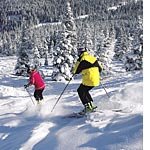
Go skiing, win a bike. Sunday is closing day at Monarch, and Saturday will feature a day's worth of competitions and entertainment. Among the prizes offered up for the first annual SnowYak Spring Competition is a Nirve-John Deere Cruiser Bike, as well as cash and a Monarch Mountain 2006-07 season pass.
To enter, go to www.skimonarch.com

Snow alert

It's 50 degrees right now in Vail, but that doesn't mean you should put away your skis. A storm is heading for Colorado. Vail, Beaver Creek, Aspen and points west and south are in the storm warning area that predicts 8 to 16 inches starting tonight and continuing through Thursday night. Some mountain passes may receive as much as two feet of new snow along with high winds.

Look! Eaglets!


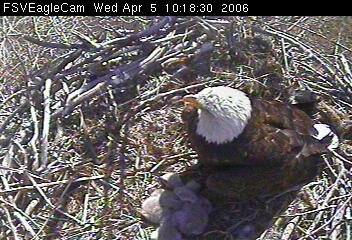
Excel Energy has an awesome set of Colorado raptor nest cams! Eagles, falcons, ospreys, kestrals, owls. See regular updates here. The owl cam even has infrared cameras so you can watch at night!

Tuesday, April 04, 2006

Top of the world to you

When your first question about an upcoming marathon is this one, you know it's remote:

Where, exactly, is Spitsbergen, Svalbard?

Spitsberger is the largest of a set of Norwegian islands called Svalbard (that's between 74N10E and 81N35E latitudes, for you map freaks) and is the staging area for what has to be one of the world's most unusual marathons: the North Pole Marathon.

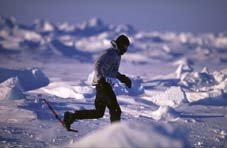
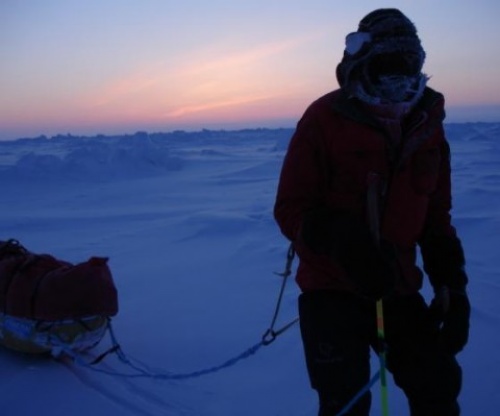
The marathon takes place Saturday, with runners competing on top of the Arctic Ocean. Fifty men and women from around the world will run on an ice sheet 6-12 feet thick that frosts the Arctic Ocean. According to the official Web site of the race, runners will wear three layers of clothing as well as balaclava, face mask and goggles, and hope for light winds. Temperatures are expected to be as low as -22 degrees F. The last North Pole Marathon, in 2004, was won by American Sean Burch, with a time of 3:43:17.

Because it's there ... in Minnesota

You don't have to head to Everest to climb mountains. Sometimes, you have to go to Minnesota.

David Lein, a Colorado Springs mountaineer who will leave for Everest on Saturday, proudly lists a Midwestern peak on his climbing resume. Included with his list of successful climbs on five of the seven summits of the world (Kilimanjaro, Aconcagua, McKinley, Vinson and Elbrus), is a smaller, but still significant, accomplishment -
Eagle Mountain in (2,301 ft.), Minnesota.

At 2,301 feet, Eagle Mountain is a distinguished spot: the highest point in that state.

One hand not knowing...


Here's some news we just got on Grand Canyon from the nonprofit Living Rivers:

In an effort to resuscitate a sport fishery below Glen Canyon Dam, Arizona Game and Fish is considering stocking non-native rainbow trout in the Colorado River just above its entrance into Grand Canyon National Park.

Seventy-five miles downstream from Glen Canyon Dam, the US Department of Interior has for three years been removing trout because these introduced fish prey on the larvae and young juveniles of the humpback chub, a native fish species whose numbers have dropped to potentially unrecoverable levels and is protected by the Endangered Species Act.

The trout removal process involves using electroshock to stun the fish, netting them by the boatload, then grinding them up for use as fertilizer at a cost of $800,000 annually.

Monday, April 03, 2006

Fourteener status in limbo

For hikers, the news in March was good: The Colorado State Legislature passed a bill that exempts high-altitude landowners from liability. Trails on several of the fourteeners in the state cross private land, and the owners had increasing concerns about theft, trespassing, liability and vandalism issues.
But the issue that impacted a trio of fourteeners the most - Lincoln, Democrat (at right) and Bross - is far from being solved, even though the bill's passage was celebrated. The appropriate signs and trail maintenance has been delayed.

In a release sent out today by the U.S. Forest Service,
"South Park Ranger Sara Mayben said, 'We are doing what we can to meet the requirements of the new Bill. Recreationists need to know that public access to the 14ers in Park County may be 2007, at the earliest. We are doing what we can to meet the requirements of the new Bill. Recreationists need to know that public access to the 14ers in Park County may be 2007, at the earliest.'

"Private land owners have stated they will not grant access to Mounts Bross, Lincoln and Democrat this upcoming hiking season unless all stipulations of HB 06-1049 are complete. Additionally, issues regarding liability, vandalism, theft, etc. must also be addressed. Stipulations of this Bill require the land owners or entities that hold a trail easement across the private land to clearly identify and maintain the trail(s). The land owners will not grant public access until after the trail easements are in place, trail maintenance has occurred, and signing has been posted to direct public use to the approved trails. The land owners may also require trail reconstruction in sections they consider to be dangerous prior to allowing public use.

"Although every effort will be made to comply with the stipulations within House Bill 06-1049, there may not be enough time for all the existing trails to mapped and landownership to be determined by the 2006 hiking season. The process to acquire the trail easements will be a lengthy one. The Pike National Forest-South Park Ranger District and our partners will begin mapping the existing trails during the summer of 2006.

"Once that is completed, land owners along the existing trail routes will need to be identified because of the trails cross several different private properties.-more-Finally, land owners will review the maps to determine which, if any of the trails will be granted easements. Reviewing may require land owners to look at the trails 'on-the-ground' and determine if any trail relocation or reconstruction is necessary prior to approving a trail easement."

Changes for Wolf Creek?

If you love Wolf Creek for what it doesn't have - a major housing development next door - you won't like this news. Federal officials have approved construction of two roads in the Rio Grand National Forest to reach a proposed development. The Village at Wolf Creek, proposed by Texas billionaire Billy Joe McCombs, would include businesses and housing for up to 10,500 people. The two roads are essential for the proposed development, and would connect it to U.S. Highway 160.

This development has been at the center of a feud that has played out for years. Opponents fear the development would harm the environment and overwhelm schools and services in Mineral County, that now has fewer than 1,000 residents. Supporters say the development would bring in jobs and revenue for local governments in a part of the state where money is scarce.

Both sides will be represented at a meeting Friday in Creede.

Wolf Creek will open one more time this Spring!


Here's a message:

Back by popular demand & excellent conditions Wolf Creek is re-opening April 8th & 9th! For this Local Appreciation Weekend lift tickets will be $23 for adults and $13 for children & seniors. Wolf Creek is accepting all season passes including weekday-only for this weekend.

The Rental Shop and Treasure Sports will be open as well as the Wolf Creek Lodge (with a limited menu). Ski school will also be available.

(The photo by Scott DW Smith is courtesy of Wolf Creek Ski Area.)

Ever dream of Ski Patrolling at Vail?

Now's your chance. I just got this press release from Vail that gives all the gory details of patrol try-outs.

If the urge to join the ranks of Vail’s best has struck, prepare to provide plenty of proof on Friday, April 7. This date marks Vail Ski Patrol’s annual testing opportunity for new hire candidates and offers those who aspire, and pass muster, a chance at donning a white cross-emblazoned patrol jacket for the 2006-2007 season.

“The testing day offers interested skiers and tele skiers the opportunity to come out, test their skills on a variety of terrain and show us what they’re made of prior to the end of the season,” said Vail Ski Patrol Director Julie Rust. “We’ll be evaluating each candidate’s abilities in a variety of conditions, including steeps, crud, and powder. We’re looking for men and women with strong, solid abilities in all conditions, not just finesse.”

The ski test consists of three to four runs taken in variable conditions and evaluated by four or five members of Vail’s patrol team. Those who pass the physical test will be invited to attend the four-day Ski Patrol Academy on April 8, 9, 15 and 16. Skiers must successfully complete all four days of the academy to be considered for the staff. Participants will learn about and get hands-on experience in first aid, toboggan handling, lift evacuation, avalanche rescue, beacon searches, and CPR. Hiring of patrol positions takes place each fall.

Each season, the Vail Ski Patrol has a handful of openings on its staff. The Ski Patrol is charged with opening and closing the mountain each day, providing emergency medical care, skier responsibility, education and enforcement, mitigation of avalanche hazard, guest relations and assistance.

“This is a way of life for most patrollers,” added Rust. “We have a great team and everyone works hard. To work outside, be first on the mountain and last off, helping people - it’s a pretty great job.”

Anyone interested in testing should contact Vail Ski Patrol at 1-970-479-4610. Reservations are required and should be made in advance of the test date. Participants must be at least 21 prior to testing. Potential applicants will meet for testing at 8:30 a.m. at the Lower Patrol Room in Vail Village near the ticket office.

Sunday, April 02, 2006

Elk Mountain race report

We'll, it's about 30 hours since I finished the Elk Mountain Traverse, and after an enchilada plate and 14 hours of sleep, I feel much better.

So now I'll try to answer the question, "What is it like to ski 40 miles?"

Skiing 40 miles from Crested Butte to Aspen is less about skiing and more about eating. I think, looking back, the people who did well (all other things being equal) were the people who forced themselves to eat, even if they weren't hungry. My partner, Hunter, set his watch to beep every 30 minutes. At every beep, we ate. We had rigged up small nylon bags that hung by our hips like holsters on a gun fighter. Instead of six shooters, they were packed with pb & j sandwiches, chocolate chip cookies, power bars, corn nuts, and energy gels.

By the end, I loathed everything on this meager menu. Try eating a sandwich while skiing up a hill in 15-degree weather and you'll understand why. But anyway, we stuck to the eating schedule and it kept us going strong. Except for a broken climbing skin, we didn't stop once the whole way.

At times I wanted to stop, but there was always that nagging reminder that stopping would just prolong the ordeal - 11 hours and 2 minutes was enough for me.

I was wondering, at the outset, what the low point would be. I figured it would happen mid-morning, when we had skied for 30 miles and were exhausted and still had 10 miles to go. In fact, it struck much earlier, probably around 3 a.m. It was dark. I was tired. I wanted to go to bed. And I kept thinking, "Geez, if I feel this bad now, how bad am I going to feel in 20 more miles?"

But then, while we were skiing up 12,400-foot Star Pass, the sun came up and I felt instantly energized. (I also had a canned espresso, which may have had something to do with it.) At that point, I realized I had passed my low point and there was nothing left to do but push on to the finish line (where there was a free keg of Fat Tire, which may have had something to do with it).

I had also been dreading skiing down the steep blue runs of Aspen Mountain, especially since when we got there, 37 miles into the race, I was exhausted. So I pulled a trick I've been planning for weeks. At the top of the mountain, I just sat down on my ski tips and basically luged the whole thing. I think I was the only person to cross the finish line on his butt. Today, I'm sore, but utterly satisfied. That is one heck of a race.

Saturday, April 01, 2006

Elk Mountain Traverse is done!


A short update. 250 people skied out of Crested Butte last night at midnight. The winners slid in to Aspen just under eight hours later, after skiing 40 miles.

My partner and I finished three hours later. It's now 4:40 p.m. I bet some people are still finishing. I'll post more about it tomorrow. Right now I'm too brain dead. Cheers.

(Photo courtesy of Elk Mountain Grand Traverse Web site.)

Friday, March 31, 2006

Ready to suffer: the Elk Mountain Traverse Check-in


I arrived in Crested Butte today for the 40-mile Elk Mountain Traverse ski race over the mountains to Aspen. We'll start at midnight so we can pass over some dicey avalanche zones at dawn before the sun loosens the snow. Now, we're packing and waiting.

As you can see, we have a lot of stuff to cram into our packs, but we have no choice; most of the stuff is required by the race organizers. We showed up this morning to have our packs checked by the judges to make sure we had everything from sunglasses to a stove.

There were about 250 other racers with their skis and packs. The scene was about what you would expect, bearded mountain folk with ratty, sun-faded baseball caps and $150 sunglasses -- and a surprising number of blue eyes.

My lovely wife, Amanda, ever the terse observer, said, "What a surprise, a bunch of white people paying to suffer in their free time." I had to agree. Looking around, you could sort of understand how Leif Eriksson got some guys to willingly sail to find the new world in an open boat.

We have 4 1/2 hours until the race starts. Now we just nap and wait and pack and re-pack. The weather looks good. It should be a balmy 19 degrees when we start tonight. Little wind. A slight chance of snow.

I can't help but think dawn will find us in good shape. Though, I have to say, last time I pulled an all-nighter, it was in college and involved beer. We'll see how it goes. The key, as Matt Carpenter would say, is CFM, constant forward motion.
I won't have a chance to post again until after the race. Don't expect it to be coherent.

First to shred


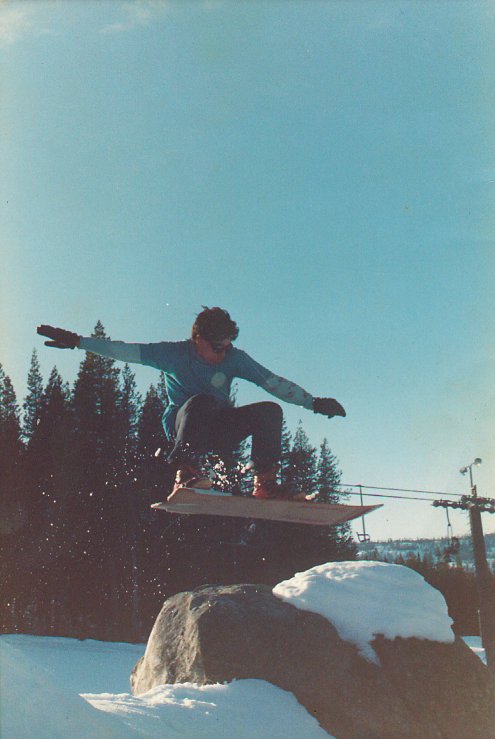
Wondering what the first mass-market snowboards looked like? How they rode? Head to Ski Cooper on Saturday and find out. Cooper's hosting its King of the Mountain competition and exhibition to mark the 25th anniversary of regional snowboard competition.

There'll be slalom and downhill races and a rail jam open to the public. Cooper got 4 inches of snow Thursday and closes Sunday, so there's no putting this one off.

The photo? According to freebeer1981.com, it's a Bryce Kanights photo, circa 1984, of Tony Guerrero on an old Burton board. Plank.

--Dena

Should you stay or should you go?


What's a Front Ranger to do when forecasts call for weekend weather great for hiking and biking, yet there's fresh snow and mere days left till most resorts call it quits for the season?

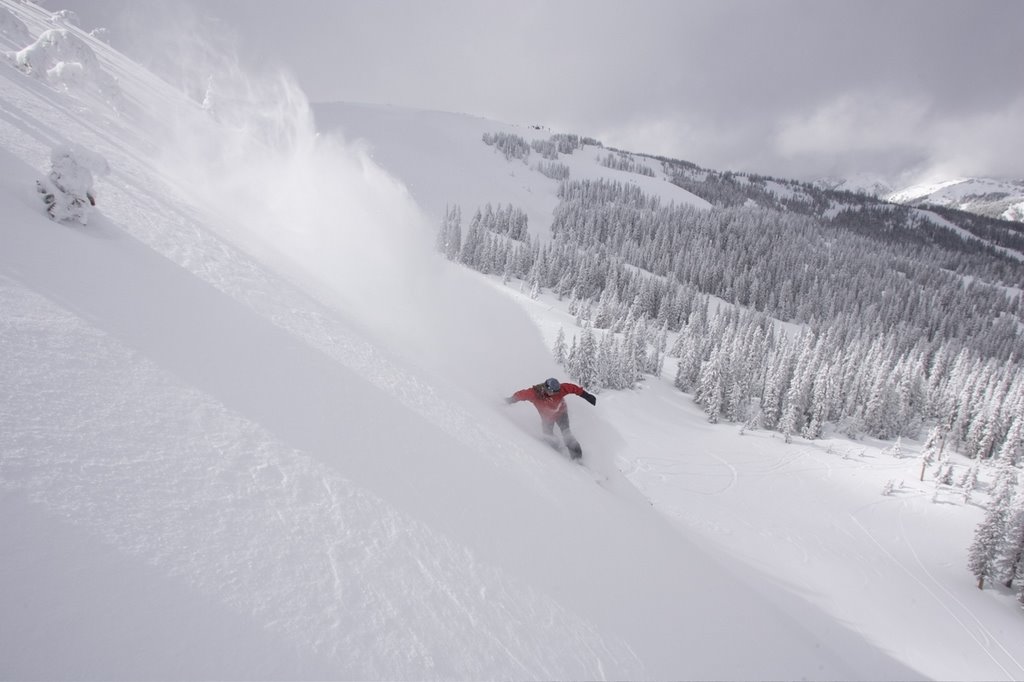
Colorado Ski Country USA, the state's ski resort hub, reports fresh snow across the mountains, from 11 inches at Vail, to 15 inches at Durango, to 24 inches - WOW - at Silverton.

It's a win-win. Whether you stay here or head uphill, do SOMETHING. This isn't the weekend for computing your tax return. Get out there.

And check here Sunday to see how Dave did on his first run at the Elk Mountains Grand Traverse (backcountry skiing 40 miles from Crested Butte to Aspen).

-Dena
(No, that photo's not from this week; photographer Christian Murdock shot it earlier this season at Steamboat.)

Thursday, March 30, 2006

Robin watch

A Gazette caller was worried. "Where are all the robins this spring?" she asked. "They're gone!"

Well, they aren't gone, except maybe from that caller's backyard. Risë Foster-Bruder, president of the Aiken Andubon Society, assured us that robins haven't vanished. It's just that they have abandoned their popular harbinger-of-spring role for year-round residency. In fact, the last Christmas Bird Count turned up 295 robins, compared to fewer than a dozen the year before.

Foster-Bruder says robins will move around in winter to avoid the nastiest weather, and then return to higher ground.

Green vs. greens

People are taking sides in the recently announced proposal to build a nine-hole golf course in Bear Creek Regional Park. The golf enthusiasts who have approached the county with the proposal believe the land, 50 acres south of the park headquarters and east of 21st Street, is perfect for a gold course. Opponents, including the Trails & Open Space Coalition board of directors, believe it's perfect without a golf course, and that golf courses don't follow the new Parks Master Plan.

Here's the sticking point: The land is not developed now other than hiking trails. Whether that's a good thing or a bad thing depends on your point of view. Many want to preserve it as a little undeveloped jewel in the heart of the city. Others would love to see another golf course, even though the region already has 31 (private and public). But everyone agrees on one point: "It's a beautiful piece of property," said course proponent Judy Bell in an article in The Gazette March 25. (Check out the area south of the community gardens on this map.)

The parks department has scheduled a public meeting at 7 p.m. April 11 at the Bear Creek Nature Center, 245 Bear Creek Road.

Lynx on their way

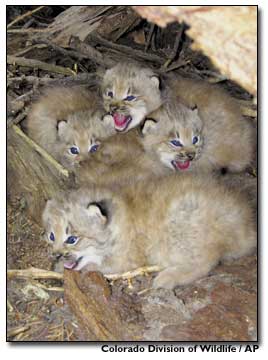
The Canada lynx population of Colorado will increase by four Saturday. That's the day the Colorado Division of Wildlife will release four lynx from the Yukon Territory and British Columbia. The program to reestablish the lynx in Colorado was started in 1999. Since then, wildlife biologists have released 218 of the big-footed cats in Colorado, mostly north of the town of South Fork and in an area bordered by Leadville, Buena Vista and Vail.
Lynx by the numbers:
4: Number that will get their first glimpse of Colorado Saturday.
14: Number to be released in April.
50: Number of kittens born in 2005.
78: Number of lynx confirmed dead since program began.
105: Number of kittens born since 1999.
140-200: Number of lynx living in Colorado now.
218: Number of lynx released in Colorado since 1999.
The DOW has more information on its Web site: http://www.wildlife.state.co.us

Start thinking Wolf Creek


The storm front causing high clouds on the Front Range is heading smack dab into Wolf Creek Pass. Wolf Creek ski area got 14 inches of fresh snow in the last 48 hours. It's snowing there now, and more snow is predicted Saturday and Sunday.

Sunday is Wolf Creek's last day, and it also happens to be a "local appreciation day," which means half-price tickets for everyone, no matter where you're from.

If you've been talking about making the 3.5-hour trek down to the Wolf all winter, now is your last and best chance.

Wednesday, March 29, 2006

The power of trees

This shouldn't come as a surprise to people who love trees: A series of studies at the College of Agricultural, Consumer and Environmental Sciences at the University of Illinois, Urbana-Champaign, has shown that trees actually enhance our lives. Researchers there look at the impact of the physical environment in the inner city on people.
Their studies showed:
- In an inner-city residence, the greener the neighborhood, the lower the crime rate.
- Girls who can view nature from home score higher on tests requiring self-discipline and concentration.
- Symptoms of children with Attention Deficit Disorder (ADD) are relieved after contact with nature.
- Inner-city neighborhoods with more trees and grass in common areas are used more by residents, who form relationships made stronger by the greenery.
- Green spaces can help relieve the stress associated with poverty.
- Inner-city families with trees and green spaces close-by have a safer environment than those in barren spaces.
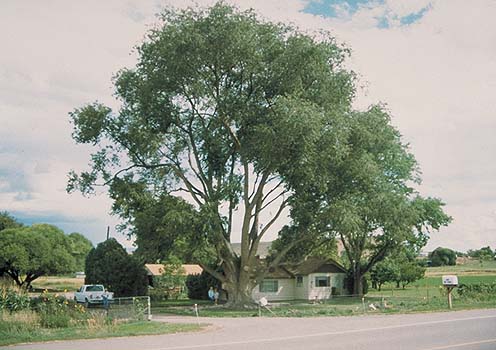
(The Siberian elm pictured here is a Colorado National Champion Tree that grows in Grand Junction.)

Park Service plan attacked


A coalition of environmental groups is working to silence the Grand Canyon. Rock the Earth is challenging the National Park Service's decision to allow motorized, commercial rafting tours and helicopter sightseeing trips to continue through the park.
The group's press release is on the Rock the Earth Web site. Rock the Earth and its environmental partners note that the presence of motorized boats and helicopters dominates the limited access to the Colorado River. They believe the ruling violates the National Park Service mandate that the Colorado River through the Grand Canyon be maintained as wilderness.

Tuesday, March 28, 2006

In search of single track, Moab style


There's a joke people in Moab don't often tell, but people in Colorado do:

Guy goes to Moab to bike, walks into the bike shop and asks, "Where's the best single track in Moab."
The bike shop employee says, "in Fruita."

OK, it's sort of an insider joke (Fruita is an up-and-coming mountain bike destination 100 miles away) - and even then it's not that funny - but it does have a funny truth in it: Moab has almost no single track. Almost all of its famous trails are old jeep roads.

For years, the town has done nothing to change that, but about a month ago, it opened one of the first new single tracks ever in the area, and the first one designed specifically for bikes. The trail is called Baby Steps. We got a hand-drawn map from a local and headed out to check it out this morning.

I can't say enough about how good it is. We had about 8 miles of windy, tight single track mixed with another 10 of fun, incredibly scenic jeep road that had it all: wide open slick rock, fast, rolling hills, steep climbs, and a little bit of us getting lost (the hand-drawn map wasn't that good).

And here's the amazing part: It was the first time all week we were on a trail with no ATVs or dirt bikes. We didn't even see any other bikers. Right now this trail is a locals' secret, but it is worth blabbing about.

If you plan on a trip to Moab this spring, stay tuned to The Gazette's Out There sections (Fridays). I'll throw in all the info for the trail soon.

Because it's dawn


"Because it's there" is the answer British climber George Mallory gave those who wondered why he felt he had to climb the world's highest mountains.

The reason behind a recent North Pole expedition is a little more poetic. South African Mike Horn and Norwegian Borge Ousland reached the North Pole last week. Why the Arctic, in winter? Because they wanted to see the sunrise from the North Pole.

The pair finished in 60 days and 5 hours. On day 59, Horn wrote on his Web site, "The Spring Equinox has arrived and the sun is in the sky 24/24. We didn’t realize that what we were seeing before was actually only the reflection of the sun. It wasn’t the sun at all. Now, after 3 months we are looking at the real sun and it is something different altogether. For the first time yesterday we saw shadows. You think you feel heat in the suns rays but in fact you don’t. It really is the most amazing sight.”

The story of the expedition is one of hardship - polar bear encounters, frostbite from temperatures as low as -40 degrees, and walking 620 miles without dogs to pull their sleds.

At the end, Horn wrote, "It's great to finally be standing on the North Pole. This mystical place is all that it is made out to be. It's incredible out here!!"

Oil and gas lease sale

Mountain bikers and black-footed ferrets won't be
pleased with this news: The Grand Junction Daily Sentinel reported today that land on the Grand Junction side of the Bookcliffs will be auctioned in an oil and gas lease sale in May. The 45,721 acres in Mesa County include popular mountain biking trails. In Moffat County, 119,000 acres have been marked for development as well, including part of the Wolf Creek Management Area, where nearly 200 endangered black-footed ferrets have been released since 2001.

Riding Petrified Clouds


Yesterday, photographer Christian Murdock and I rode Moab's famous Slick Rock trail. And this morning, even after a strong coffee, I realize there is no way to describe it that doesn't make me sound like the hack leaflet author whose work covers fliers on the walls of every business in town.

But, hey, really, the only obvious difference between a leaflet writer and a newspaper writer is the quality of paper, so here goes:

Slick rock is a truly unique place. And I don't mean "huh, this is different." I mean "there is nothing like this in the world."

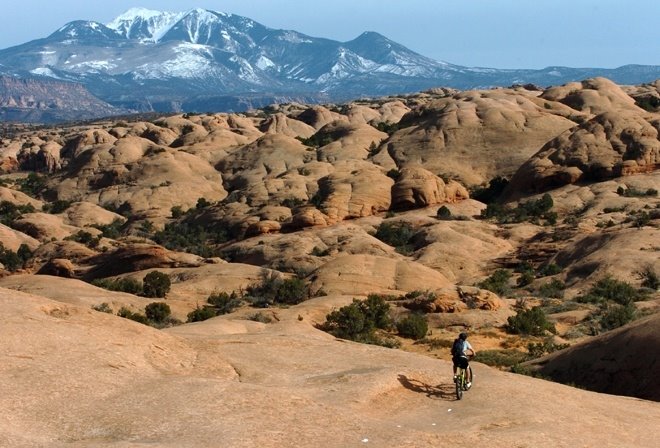
When I was young, I used to look up at the puffy cumulous clouds on summer afternoons and dream about being able to walk along the surface, exploring all the rounded swales and towners. Slick Rock is like one of those clouds petrified. The trail rolls over domes and long sandstone fins, rarely touching dirt.

It hugs cliffs and swings riders out to unexpected views where suddenly, turning a corner, the Colorado River is right there, slinking through a canyon as slow and muddy as the Mississippi.

It's no wonder when Mountain Biking magazine first wrote about this trail (originally built by motorcyclists) in 1986, it put Moab on the map as a mountain biking Mecca.

Yesterday, true to its reputation, the trail had probably 100 riders on it. The parking lot was full. Sometimes on narrow parts of the trail, we had to wait for groups to go by. Not that we weren't happy for the rest. This long, up and down trail could easily handle twice as many riders, and does on peak weekends.

This morning, we're trying something new. The locals just finished building the first new trail in years, a scenic single track called Baby Steps. We're on our way to check it out. Look for the report here this afternoon.

Monday, March 27, 2006

Way to go!

Two local athletes have been nominated for an Everest Award, the outdoor industry's most prestigious honor. Nancy Hobbs and Matt Carpenter have been nominated in the trail runner category. According to the Teva Mountain Games Web site, the awards are "given annually to the top male and female athletes whose skill and innovation has pushed their sport to new heights and redefined the parameters of the achievable. They are pioneers, innovators, leaders, change agents and reflects the soul of the sport."

That pretty much sums up the running careers of Hobbs, a veteran race organizer, runner and writer, and Carpenter, who holds the record for both the Pikes Peak Ascent and Marathon. The winners will be announced at a ceremony June 3 in Vail.

Favorite quotes from these guys:

From Carpenter's inclineclub.com Web site, about when he started running and why: "When I moved to Mississippi I started running because I had nothing else to do. I had always played in the band and it turned out because of a scheduling conflict I had to drop band to take chemistry. Soon after I heard an announcement to try out for cross country. I did because I thought they really meant I would run across the country!"

From Hobbs' bio on the same site, about when she started running: "Sometime in high school because my father started running and I wanted to see how far I could run."

Sure signs of spring skiing

From the eyes of Gazette editor Joanna Bean:

1. The parking lot is full but the slopes are deserted. The patio at the base lodge? It's packed.
2. The lift attendants are crabby. Or giddy.
3. On the drive home you see kayakers pulling out of the river.
4. The sun is still overhead while you're soaking in the creek-side pools at Mt. Princeton - even though you caught the last chair up at Monarch.

Mad about Moab


I'm at the corner of Main and Center Streets in Moab, Utah, watching one car after another cruise past with full racks of bikes, bound for the red desert beyond. It's 60 degrees. The flowers are opening on the cherry trees in town. Spring riding season is in full effect.

This morning, after sleeping out on a gorgeous bluff in the desert where the stars were so bright I had to bury my head in my sleeping bag, photographer Christian Murdock and I rode the 14-mile trail/road to Gemini Bridges, a natural sandstone bridge spanning a dark, echoey canyon.

We weren't there five minutes when about 10 trail bikers pulled up. Then three more. Then four more. Then an old couple with a fancy (but dumb) dog that almost fell in the canyon. Then a mom mountain biked in with her kids. "No, don't throw M&M's down in there" she said. And then the kids did anyway when her back was turned.

This is all just to say that Moab is a wonderful place, but if you take some of the easier, more accessable roads, like the one to Gemini Bridges, you should expect to have some company.

We're here on assignment for two more days. We'd love any hints about what not to miss.
Click below to tell us about your favorite places to ride and eat.

Not lovable Bullwinkle

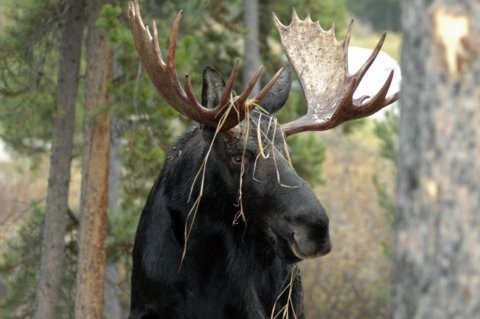
Warning to moose: The Colorado Division of Wildlife won't tolerate bad behavior. Warning to people: Watch out for moose.
On Sunday, a bull moose attacked and seriously injured an elderly resident of Grand Lake who was walking to church. The moose was shot and killed after the attack. "All indications are that the moose attack was unprovoked," said DOW regional manager Ron Veldade. "The DOW will not tolerate wildlife aggression towards people and in this case we felt fully justified in killing the moose."

Another attack by a moose was reported two weeks ago: A moose knocked a woman to the ground and stepped on her after it was startled by her dog. She wasn't seriously injured.

Moose encounters aren't that rare. I know a wildlife photographer who has spent time in Alaska photographing grizzlies and wolves but who had one of his scariest encounters when a moose charged him. A friend in Winter Park was jogging with her dogs near the river, and was charged by a moose. I've been lucky: Both times I met moose face to face on a trail (in the Grant Tetons and in Rocky Mountain National Park near Grand Lake), I walked away. Luckily, the moose I met were preoccupied, munching on lush green willows.

So, if you meet a moose, what do you do? These tips are from Alaska Fish and Wildlife Protection:
1. Never get between a cow and her calf.
2. Never throw anything at a moose.
3. Keep dogs under control on the trail.
4. Avoid moose that are in a fenced area or place where they might feel cornered.
5. Step behind a tree if a moose charges.
6. If a moose charges, raise your hands over your head and spread out your fingers. Hold your arms still.
7. If a moose attacks, fall to the ground, cover your head and stay still.

Springtime in the Rockies


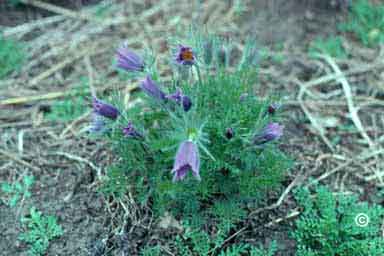
Coloradans know that it's not really spring until the pasque springs. That's in the pasque flower. Folks at Starsmore Discovery Center in North Cheyenne Canyon park, say it's happened. The delicate-looking lavender flower has been spotted on Upper Meadow Loop.

Friday, March 24, 2006

My little slice of heaven


Here's your bit of trivia for the day. Use it like this to impress your friends at your next party:
Did you know there are 507 million acres of public land overseen by the Department of the Interior (including the National Park Service and the Bureau of Land Management)?
And follow up with this: That's one out of every five acres nationwide.
And this: That's about 1.7 acres for every person in the United States.
(That's my 1.7 acres, at right - in Rocky Mountain National Park.)

Advertising on public land?


The Forest Service is considering changing the rules for advertising on public land. Right now, almost all advertising is banned, but ski areas (most of which lease land from the Forest Service) have been pushing for rules that let them advertise to skiers and snowboarders on chairlifts. Think placards on lift poles, etc.

People have until Monday to comment on the rule change.

If you want to let the Forest Service know what you think about billboards at ski areas, send a letter to USDA Forest Service, Attn: Carolyn Holbrook, Recreation and Heritage Resources Staff (2340), 1400 Independence Ave. S.W., Stop 1125, Washington, DC 20250-1125. Or send a fax to Holbrook at 1-202-205-1145, or an e-mail to rhr2300@fs.fed.us.

What's Silverton Mountain Really Like? Take a look:

There's so much talk, and so little actual information about Silverton Mountain for two reasons, I think. First, this epic quiver of steeps and chutes has only allowed 80 skiers a day, so very few people have actually been there. Second, those who have been, can't help but turn it into a fish story, where the runs get steeper every time they tell the tale. So what is it really like? Photographer Christian Murdock and I were there in late January. Have a look at what we saw.

Silverton Mountain opens unguided skiing March 31. Now it's your turn. Have you been to Silverton? What tips do you have for people who might go?

Thursday, March 23, 2006

Pay to play?

I know people who live near Mueller State Park who haven't been inside its boundaries since it was opened. The reason: They won't pay to visit a place they used to explore free of charge.

Whether to charge or how much to charge is a dilemma faced by many states. Most states, like Colorado, rely on fees to help pay the bills.

On Monday, officials in Washington took a step in another direction, removing the $5 day-use parking fee from all state parks. They said attendance at many parks dropped dramatically after the fee was imposed. Officials there are optimistic attendance will increase in the 120 state parks now that entry is free again.

Rocky Mountain fever


Maybe it's just a coincidence, but with all the wildlife getting attention in New York City - falcons nesting, coyotes running - it seems like New Yorkers are just a little jealous of what we have in Colorado.
Case in point: Aspen, a new restaurant/club on W. 22nd Street, that city bloggers are touting as the hottest place to be seen. Reports are that Aspen has an over-the-top ski lodge decor, complete with a foggy forest, an aspen grove, and deer heads made of Lucite (it is New York, after all).

Waiting, waiting, waiting

The waiting list for people who want to raft the Colorado River is legendary, with some people waiting as long as 10 years for the chance to put their raft into the water. That could change with a plan just approved that allows more people to float through the Grand Canyon each year, but spreads out the trips over more months and in smaller groups.
The approval of the new plan, announced by the National Park Service, has also been a years-long process itself. Four years ago, a group of scientists, park officials, tour operators, and members of American Indian tribes and the public began studying usage plans:

PHOENIX (AP) — A plan that allows more people to float down the Colorado River through the Grand Canyon each year but spreads them out over more months and in smaller groups has been adopted by the National Park Service.
The new Colorado River Management Plan also eliminates the current waiting list for those who want to raft the river in noncommercial boats, replacing it with a lottery system. Many people sat on the waiting list for more than a decade, and the lottery will give them some preference but does not guarantee them a slot.
The plan will shift more travelers into the fall, winter and spring months, while cutting the number of daily summertime launches of both motorized and nonmotorized commercial rafts in the upper Grand Canyon.
The result would be more tourists overall. The lower Colorado River, from Diamond Creek to Lake Mead, will see the number of pontoon boat tours go up, allowing up to 480 passenger per day, up from the current 130 passengers. The plan bans jet boat tours entirely, but commercial operators that use the craft to meet rafts above Lake Mead would still be allowed.

For more info, go to http://www.nps.gov/grca/crmp/

A new beginning?


It's called delisting, and yesterday, the Wildlife Society endorsed it. A release sent by the National Wildlife Federation announced the organization believes grizzly bears in the Yellowstone ecosystem should be removed from the threatened and endangered species list:

Missoula, MT (March 22) – The nation’s largest organization of professional wildlife scientists has endorsed the removal of grizzly bears in the Yellowstone ecosystem from the nation’s list of threatened and endangered species. The Wildlife Society, comprised of nearly 7,000 individuals nationally, is joined by its Montana, Idaho and Wyoming chapters in supporting the delisting of Yellowstone’s grizzly bears.
The Wildlife Society’s position statement calls the grizzly recovery effort “a model for how cooperative efforts by state and federal resource management agencies can lead to the recovery of a listed species.” The Wildlife Society statement is particularly important in contrast to a recent letter signed by some scientists who oppose delisting.
In November, the U.S. Fish and Wildlife Service declared Yellowstone grizzly bears recovered and proposed plans to remove the bears from the Endangered Species Act’s list of threatened and endangered species. The Wildlife Society has chosen to endorse delisting because it found that population abundance, distribution, and mortality targets established in the Grizzly Bear Recovery Plan have not only been met, but “far exceeded targets in the recovery plan.”
According to the Wildlife Society:
- From an abundance standpoint, the goal of observing at least 15 different females with newborn cubs per year (based on a six-year running average) across a standardized counting area consisting of the recovery zone and a ten-mile perimeter was met every year since 1986. Extrapolating from the number of females with newborn cubs observed during 2004, the total population was estimated to be 588 bears using the methods of Keating et al. (2003). This estimate is greater than twice the population of 250 bears calculated at the time of listing in 1975.
- The annual distribution target (i.e., at least 16 out of 18 of the recovery zone's Bear Management Units must be occupied by observed females with offspring over a six-year running sum) was exceeded every year since 1998. During three of these years (2000-2002), females with offspring were observed in all 18 Units.
- Mortality of females aged two years of age or older, from all causes including estimates of unreported mortality, has been below the current threshold of no more than 9%.
“Grizzly recovery efforts have been under way for more than 20 years,” says Tom France, Director of the National Wildlife Federation’s Northern Rockies Natural Resource Center here. “Leading bear scientists helped develop a bear recovery plan with specific recovery goals. These recovery goals have undergone extensive public review, and have been ratified by the courts.”
The Wildlife Society statement notes, “the current level of recovery in Yellowstone was achieved through the active collaboration of state and federal resource management agencies. The continuation of this fruitful collaboration may be jeopardized if unattainable recovery targets are substituted for realistic and pragmatic ones.”
“We have been involved with grizzly recovery every step of the way, including development of quantifiable recovery goals,” says France. “Over the last two decades we have leaned hard on both federal and state agencies to ensure these goals were met. Now we feel a deal is a deal. It would be wrong for us to try to raise the recovery bar now that goals have been met and exceeded.”

Snow-free hiking for this weekend.


It's warming up fast and this weekend is supposed to be a beautiful, but that doesn't mean the trails are dry. Even though the snow is almost gone in town, the foothills got much more moisture from the last storm and have managed to hold onto the ice because it's been so cold.
So....
If you want to get out and enjoy a sunny afternoon this weekend, take these trails instead:

Aiken Canyon -- An awesome four-mile loop through a nature preserve southwest of town.

The Paint Mines -- Not truly a hike, but a neat place to go mess around near Calhan.

Tunnel Drive -- An old railroad grade (pictured above) running from Canon City into the Royal Gorge.

Or, how 'bout taking a spin on Colorado Springs sprawling network of urban bike trails?

At peace on the nest


Pale Male, the red-tailed hawk that lives on a ledge above Fifth Avenue in Manhattan with his mate, Lola, continues to hunt pigeons and rats in Central Park to bring back to the nest, where Lola patiently sits on the couple's eggs. Yesterday, some stunning photos were posted on Palemale.com of Lola on the nest and Pale Male bringing home dinner.
The photographer writes that he is amazed at the peace Lola seems to exude, even with all the madness of the city blaring around her.
It's amazing these birds are back. Just last year, the rich residents who own their apartment ledge removed their nest. It was only after editorials in the New York Times and days of protests in front of the building that the birds were allowed to stay.
The hawks mated in early March, which means their eggs could hatch near the end of April. Keep watching.


And speaking of critters in Manhattan. More news of the coyote captured in Central Park yesterday. Given the name Hal, after the Hallett sanctuary in the park where he was first spotted, he isn't the first coyote to turn up in the park. In 1999 a coyote named Otis showed up. He now resides in the Queens Zoo.
City wildlife officials speculate that coyotes live full-time in the Bronx, just northeast of Manhattan, and Coyotes may actually have dens in Manhattan. For more photos of Hal, click here

Wednesday, March 22, 2006

Bright lights, big city


How did a coyote get to New York City's Central Park Wednesday? An AP story has officials saying "the animal may have wandered into the city from suburban Westchester County, or perhaps crossed the Hudson River from New Jersey via a bridge, a railroad trestle or a passing truck."
We like the passing truck theory, in which the coyote (wily, of course) stows away in a truck, in hopes of making it to the big city.
The coyote, nicknamed Hal, was captured close to 79th Street and Central Park West, after he was shot with a tranquilizer gun. He will be taken to a wildlife center outside the city.

You've never tracked moose like this...

Web-savvy wildlife watchers can track the movements of two female Shiras moose captured in Utah and released on the Grand Mesa in January.
The girls are fitted with special telemetry collars that send a GPS signal to satellites. The data is sent back to computers on Earth to allow biologists – and anyone who has Internet access – to track the moose.
To see the tracking information, go to the DOW Web site.
Speaking of online wildlife, the owls at the owl cam are still there and - surprise - they are alseep right now.

Now we're talking


You've just finished a rigorous workout and you reach for a sports drink. You know, the kind that comes in red or blue or green and says it replenishes all the fluids and some important nutritients that left your body while you sweated and strained. A physiologist at Indiana University Bloomington believes you should rethink that sports drink choice. His suggestion: chocolate milk.

Joel Stager, a professor of kinesiology, has found that drinking chocolate milk is the best way to recover after a workout. It has a high carbohydrate and protein content and replaces fluids lost as sweat. Stager first tested his chocolate milk theory on swimmers, and the promising results led him to conduct a study with cyclists in a more controlled environment. He said chocoloate milk is most beneficial to such athletes as swimmers, long-distance runners and cyclists. Wonder if you could substitute a hot-fudge sundae?

Cheap skiing at Wolf Creek


If you read my breakdown on the cheapest spring skiing and saw the mention of Wolf Creek's Local Appreciation Day where you can ski for $23, ignore the date.
The real date for the last locals day is March 29. And the Wolf has lots of snow, so it might be worth checking out.

Who's reading this blog?


We have a tool here in the newsroom that lets us see how many users view this site, when, for how long and, most interesting to me, where they navigate from to get to our page.
Most of our visitors come from gazette.com, or our excellent Out There Web page, outdoors.coloradosprings.com.
But some people end up here after searching on Google for phrases like "skier, tree" or "Iditarod, Colorado."

The most recent search was "Fourteeners, Jesus."
I'm thinking this guy was a local.

To see the Google results of this search, click here.

A tour of the burrow from the BLM

B
The Bureau of Land Management has started a cool occasional online series called "Road Trips."
The monthly e-mails highlight a program or region of the state that the BLM works with. And it's not the typical "been there, done that" stuff you find in most fliers.
This month, the road trip gives a detailed tour of the Black-Footed Ferret reintroduction program in northwestern Colorado. To see it, click here . Generally, the tour is pretty good. It tells readers the history of how the ferrets grew from a wild population of just 18 in 1985 to a meticulously managed population of about 1,000 today.
It does leave out that Colorado's population has had almost no success in reaching the goal of a reproducing wild population, but it does give readers links to some good ferret-centered nonprofits that offer more info.
You can see the latest road trip at www.co.blm.gov.

Tuesday, March 21, 2006

An ode to winter

It's spring, and the snow is leaving the foothills. Soon, it will be gone from the mountains. As a fond farewell to a memorable winter, I offer up this excerpt from one of naturalist and Rocky Mountain National Park advocate Enos Mills' essays called "In a Mountain Blizzard". In this essay, Mills, who frequently sought out the barren summits of peaks along the Continental Divide, tells about a battle he and his dog Scotch waged to survive a blizzard:
"At last I realized that I must stop and spend the night in a snow-drift. Quickly kicking and trampling a trench in a loose drift, I placed my elk-skin sleeping-bag therein, thrust Scotch into the bag, and then squeezed into it myself. I was almost congealed with cold. My first thought after warming up was to wonder why I had not earlier remembered the bag. Two in a bag would guarantee warmth, and with warmth a snow-drift on the crest of the continent would not be a bad place in which to lodge for the night."

Back to the beginning


Here's a trivia question for you: Which Colorado ski area hosted the first snowboard competition?
(Bonus question: What year was it?)
If you remember the contest at Ski Cooper, you're right. If you remember the year, you're really good. If you were there, you're old!
In 1981, Cooper opened its slopes to a strange and virtually unknown competitive sport - snowboarding. To commemorate the silver anniversary, Cooper is hosting "Return to King of the Mountain," a celebration of the sport that transformed ski resorts. The event will feature legendary snowboard pioneers competing on antique equipment furnished by Burton, Sims and Winterstick. There's also a rail jam open to the public, and live music. Check it out April 1 (closing day) at Cooper.

Hot Wheels


I just paid a visit to USA Cycling and got a chance to see what the U.S. team mountain bikers are riding in 2006, and it's hot.
They're on the Specialized S-Works bike: a carbon frame, disc brakes, top-of-the-line components and the most awesome rear suspension I've ever tried. The new Brain shock automatically adjusts the suspension from firmly efficient in smooth terrain to fully active in the rough stuff. Most of the time, it feels like it's a hard tail, but get into the rocks, and it immediately softens up. Very, very cool. And light, and responsive -- a race horse.
I was lusting after it. I was even thinking of turning in my old Univega.
Then I saw the MSRP: $7,800.
Wow. Too close to how much I paid for my car.
Can anyone recommend a good, all around bike that is a good value?

What are these guys learning at CU?

The Rocky Mountain News had a story today detailing how four guys from CU got lost while snowshoeing on Mt. Princeton.

These guys did just about everything wrong: They wore all cotton in a wet snowstorm; they left the trail to find a "short cut" down; they split up.

They were rescued at about 11 p.m. after calling search and rescue on a cell phone.

The rescuers said the hikers were aloof and expressed little gratitude. But the father of one young man later said the hikers would say thank you and send a hefty donation to search and rescue.

Anyone looking for basic advice before heading into the backcountry could do well reading a Gazette article with Colorado Mountain Club trip leader Bill Houghton. In short, be prepared.

And should you need help, always thank your rescuer.

Coalition Building


The head of the Nature Conservancy in Colorado, Charles Bedford, had an op-ed piece (posted below) in The Gazette today lauding a new $7 million buffer zone around Ft. Carson. Turns out, what's good for artillery ranges is good for Bambi lovers too.

The problem for the fort was this: The exurbs of Pueblo West were creeping in on the southern flank. Battalions of doublewides, each on about five acres (none with any water), had taken a position on the eastern front. I was doing trail work with a young captain one day last summer and he was grousing about the doublewide residents complaining every time the practices at Ft. Carson's gunnery range got too spirited. According to him, people even had their windows blown out.
What could Ft. Carson do? It's not going to stop lobbing shells, so it started buying people out to create a strip of undeveloped land around its proving grounds.

It turns out this strip is critical for the Nature Conservancy's master plan to maintain an undeveloped corridor on the rapidly urbanizing (or at least suburbanizing) Front Range. The group already owns the 41,000-acre Bohart Ranch southeast of Colorado Springs, which links up with two other conservation-minded ranches to the west, Chico Basin Ranch and T-Cross Ranch. These lands connect with Ft. Carson. On the west side of the post, the Nature Conservancy owns the 1,600-acre Aiken Preserve. The preserve connects to the Pike National Forest.
Together, these properties form a strand of undeveloped land stretching from the low cholla cactus flats to the icy alpine summits, creating a corridor in which animals can travel relatively freely.

So, everybody wins. Well, everybody except the people who didn't want to move out of the buffer zone.

The thing about this that I think people often overlook is that in this military town, the military bases act like open space buffers already. What would Colorado Springs look like without Ft. Carson and the Air Force Academy acting like bookends? It's not a pretty picture.

The guest commentary by Charles Bedford:
Fort Carson buffer zone a Boon to region
By CHARLES E. BEDFORD THE NATURE
CONSERVANCY OF COLORADO
The Army’s recent allocation of an
additional $7 million to conserve buffer zone lands around Fort Carson will
protect not only our country’s military preparedness, but also our state’s natural heritage. The leadership and vision exhibited by U.S. Sen. Wayne Allard, Rep. Joel Hefley and the Army have begun a stream of financial and community support to an effort that ultimately will safeguard the open space and beauty of this region. Rapid urban development and loss of natural areas around military bases across the country pose a growing challenge to both military training needs and the conservation of significant wildlife habitat. As housing and other human development creep closer to military base borders, restrictions are often imposed on military activities, which can undercut the realism and effectiveness of training. This rapid development also poses an obvious threat to the relatively undeveloped lands surrounding Fort Carson, including land that is critical for four rare plant species that are found nowhere else in the world. In addition, species of concern such as the
mountain plover rely on the area for habitat. Mexican spotted owls, ferruginous hawks and herds of elk and pronghorn also depend on these lands. Fort Carson is in the bullseye of development pressures. In the last decade, the population of Colorado Springs has grown 30 percent,
topping a half-million and making Forbes Magazine’s list of “Steroid Cities.” As Colorado Springs continues to invest in its growth, we must also invest in preserving the open spaces and diverse wildlife that make Colorado such wonderful place to live. Under the Department of Defense
buffer program, the military, state and local governments, conservation groups, and landowners are all working together to protect training, quality of life, traditional lifestyles and natural resources. Activities involving private land are undertaken with the full endorsement of willing landowners.
In these days of fiscal constraints and increasing conflicts over land use, a policy that accomplishes multiple public benefits with one action and that is based on cooperation and collaboration rather than conflict deserves everyone’s support — and certainly has ours. While Allard’s and Hefley’s leadership has allowed us to make great progress, there is more work to be done. Only about half of the land in the buffer zone around Fort Carson is now protected under this voluntary collaborative partnership. We’re at the 50-yard line with a long way to go. But with the leadership of our legislators and the Army, and the support of willing landowners seeking to preserve their way of life and of the local community, we know we can go the distance. Building on this momentum, The Nature Conservancy of Colorado has launched the Peak-to-Prairie Project in partnership with Colorado Open Lands and the local ranching community to protect a landscape stretching east from Cheyenne Mountain to the Chico Basin and Bohart ranches, knitting together a series of protected lands and preserving open spaces between Colorado Springs and Pueblo. Neighboring ranchers are a critical part of the buffer effort. The shortgrass prairie ecosystem needs large, unbroken landscapes to thrive, and ranches provide some of the best remaining large
examples of this system. Sustaining wildlife and our agricultural heritage go hand-in-hand. Ranchers, military staff, public agencies and local people are coming together in an unprecedented way to make this a very exciting, crucial time for the region. What we do today will determine what this
landscape will be 10 years from now. Here, now, there is the chance to protect huge parcels of land owned by just a few people. In a very real sense, the team effort will define the future of this community. It’s no wonder Fort Carson is becoming a model throughout the country for how to use buffer zones to enhance wildlife and quality of life while preserving traditional lifestyles and military needs. The Nature Conservancy stands with so many others in the Colorado community to say thank you to Allard and Hefley and to the Army leadership at Fort Carson and in the Pentagon for their stamina and wisdom in protecting the community values embodied in this special place. Bedford is state director of The Nature Conservancy of Colorado former director of the
Colorado State Land Board.

Monday, March 20, 2006

Psst. Fence. Pass it on

You love 'em or you hate 'em. We're talking prairie dogs. North of here, in the Boulder/Broomfield counties area, folks just can't agree about the little critters. So they're compromising by putting up a fence, according to an Associated Press story that moved this weekend. The 2,400-foot fence is supposed to keep the 'dogs on the Boulder side, where they are protected, and keep them away from the Broomfield side, where they are despised. Volunteers erected the fence out of chicken wire and pegs that they hope will keep the prairie dogs on the side where they are welcomed. Will it work? Boulder County wildlife biologist Mark Brennan explains that prairie dogs will walk until they reach a vertical barrier and then try to dig under it. A two-foot apron of wire is designed to stop them, but Brennan says the persistent animals will eventually find a way over, around or under the fence.

Banquet-bound?


Here's another reason to hurry your team of sled dogs along in the Iditarod - if you're slow, you might miss the banquet. The 2006 Finishers Banquet took place Sunday night in Nome, Alaska, where awards were handed out. Sixty-five mushers attended, but five others hadn't finished the race yet. (Note to Colorado musher-watchers: Bill Pinkham of Glenwood Springs came in 40th; Buena Vista's Lachlan Clarke finished 63rd of 83 teams.

Natural vs. Synthetic clothing


14er Skier Lou Dawson had an interesting post this weekend about the benefits of wool versus synthetic layers.
His take: both are good, but when it comes to a light, next-to-skin fabric, the new, soft wools win. They're warmer when they're wet, and can still stop the stink almost as much as an anti-microbial synthetic shirt.

A growing number of outdoor companies are going back to wool and wool blends, including, of course, Smart Wool, Ibex, Ice Breaker and Ortovox.

In the snow, a sign of spring

I was on a backcountry ski in Summit County Saturday when this current storm-system first moved in. A friend and I had skied to the top of 11,400-foot Georgia Pass. Just as we reached the top, the front of the storm hit. And even though it was snowing, we heard a sure sign of spring in the form of thunder grumbling up in the clouds. We didn't see any lightning. But the thunder cracked and echoed off the hills. It sounded like summer.
It won't be long now until all the snow, even in the high country, has melted away.

A big storm that was supposed to drop up to a foot of snow on Colorado Springs wasn't all it was cracked up to be. The north end of town and Woodland Park got about four inches, but the center of town got just enough to make it icy for the morning drive.
Yesterday afternoon, I was out walking with my wife in the sunshine, and she said, "You know, I hope it does snow really, really hard. I love those big storms."
And the snow swept in hard a few minutes later, but only lasted for about a half hour. Just enough to water my flowers... and freeze them.